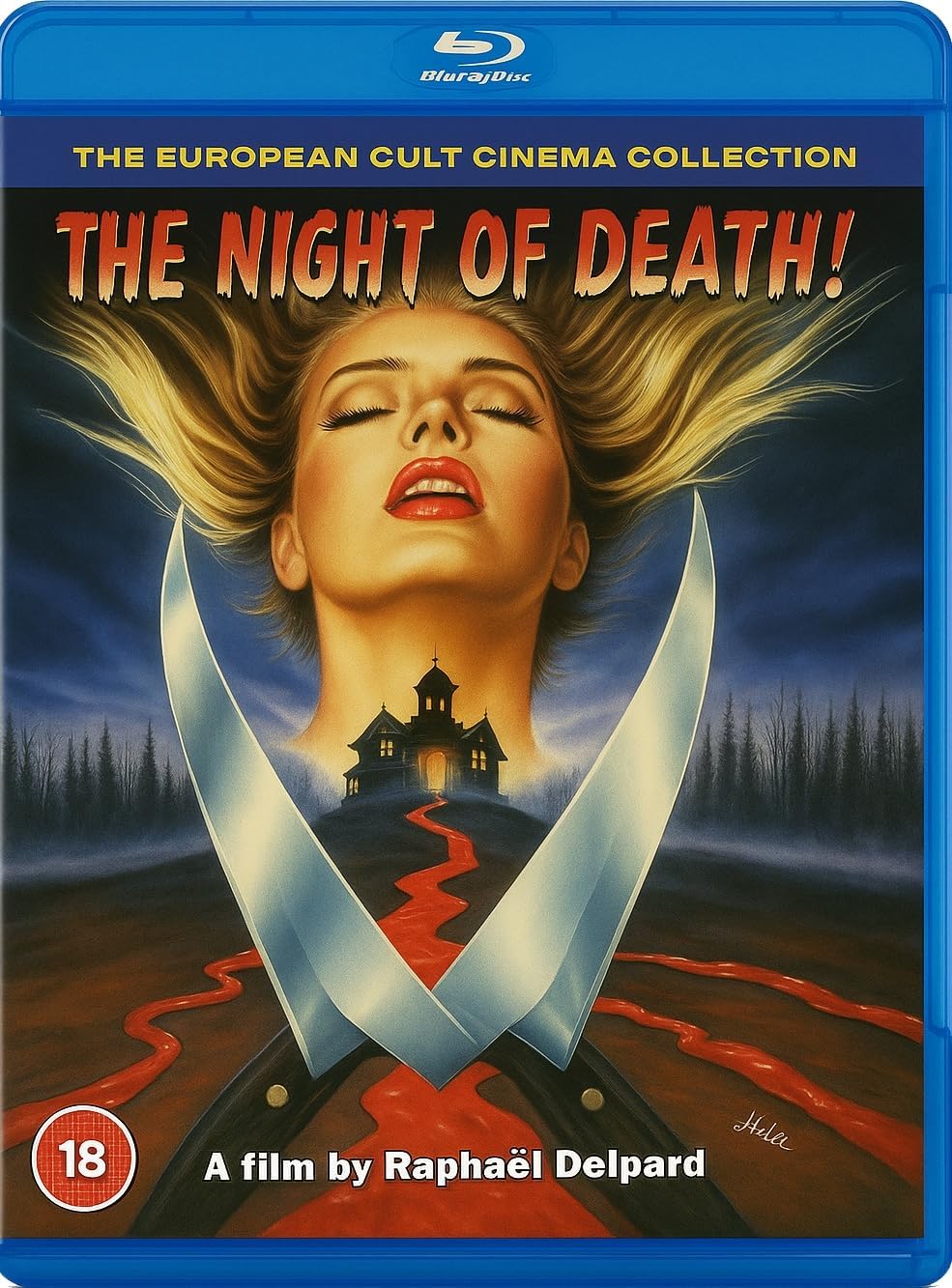
At first glance, The Night of Death would appear to be a little-known entry in the Italian giallo idiom: a murderfest in which two or three barely clad starlets meet bloody ends. In fact, the actual title of the film is La Nuit de la Mort, and it is a gallic entry in the horror genre, here granted the kind of careful attention that Nucleus Films always bestows on its esoteric issues. Youthful, attractive Martine (played by Isabelle Goguey) has been reluctantly taken on as a nurse at Deadlock House, an isolated retirement home, but she quickly realises that the place is even stranger than she expected. The elderly eccentric residents all have some kind of grotesque dietary requirement rather than just their vegetarian diet, and are under the thumb of the nominating Helene (Betty Beckers). Before long, blood – and a variety of organs – are being spilled. The director Raphael Delpard takes his time before plunging headfirst into grande guignol territory, but justifies this with his solid cast and striking cinematography.
Category Archives: General
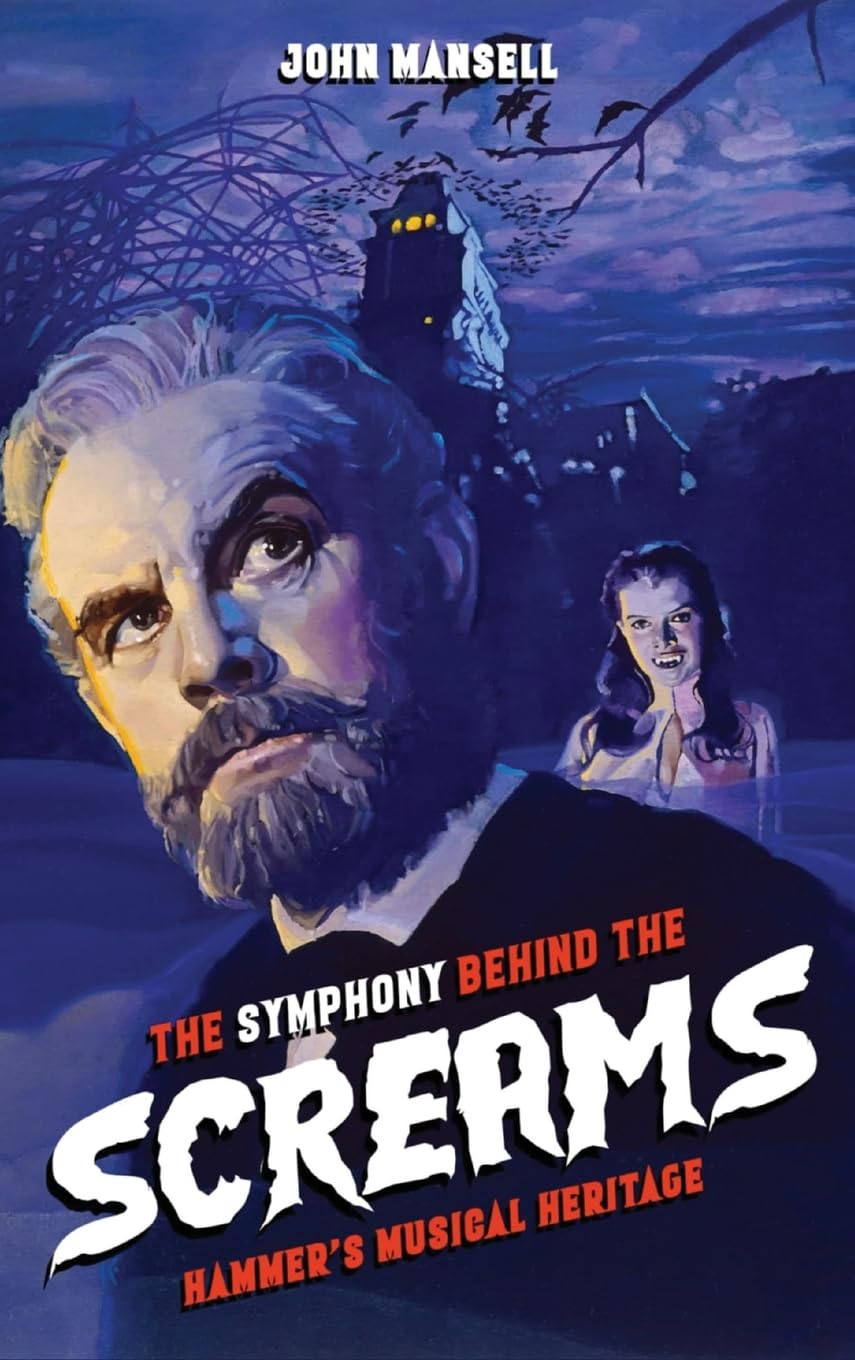
The Symphony Behind the Screams: Hammer’s Musical Heritage by John Mansell
Barry Forshaw
There was a time when aficionados of Hammer Films’ memorable film scores had to make do with the odd scrap recorded here and there. That, however, is a situation that has thankfully been remedied over the years, with most of the striking orchestral scores now available in some form or other — particularly those composed by the man who was the doyen of the field, and who might be called its most significant practitioner (in much the same way that Terence Fisher is recognised as Hammer’s key director): the late James Bernard. But Bernard was not alone in his noteworthy endeavours, and several extremely creative musicians supplied suitably unsettling music for many of the classic Hammer films, including one of the very best (in terms of both the film and its score): Curse of the Werewolf, which was scored by Benjamin Frankel. Another memorable contributor was a composer that this writer had the good fortune to know – and who was more than ready to discuss his work, the late Richard Rodney Bennett. While Hammer films are currently undergoing a series of deluxe presentations as part of the company’s latest iteration, what better time for the publication of The Symphony behind the Screams: Hammer’s Musical Heritage by John Mansell, a concise but comprehensive examination of the music that finessed the frissons of our favourite Hammer films. The book arrives with an encomium from Steve Rogers (the man guiding the ambitious reissue programme for many of the classic Hammer films). Rogers notes Mansell’s admirable balancing of composer interviews with in-depth commentary. The encomium is full justified, and – needless to say – Hammer enthusiasts need not hesitate.
The Symphony Behind the Screams: Hammer’s Musical Heritage by John Mansell is published by BearManor media
Latest from Second Sight, Arrow, 88, StudioCanal
POSSESSION, 4K, Andrzej Zulaski, director/Second Sight
The reputation of this bizarre cult arthouse-cum-horror film has grown over the years, and its hysterical appeal remains implacable (whether you like it or dislike it, you’re unlikely to be indifferent). Most striking are the scenes of Isabelle Adjani’s grotesque nonhuman lover – with which she is seen in naked embraces. This tentacled monstrosity is Carlo Rambaldi’s most persuasive creation outside a certain cute Steven Spielberg alien.
THE BIG BLUE 4K, Luc Besson. director/Studio Canal
Luc Besson’s spectacular aquatic odyssey looks breathtaking in StudioCanal’s new 4k iteration – earlier versions are now redundant.
DAUGHTERS OF DARKNESS, Harry Kumel, director/Radiance
The vampire film genre seems to lend itself with ease to a variety of reinventions, but few are more surreal and intriguing that this beautifully shot entry from director Harry Kumel which gives every impression of being more influenced by Alain Resnais’s Last Year in Marienbad than any of Hammer’s vampire outings. Resnais’s muse, Delphine Seyrig is mesmerising here.
SPINAL TAP 2: THE END CONTINUES, Rob Reiner, director/Sony/Elevation
Whatever your response to this belated sequel to the beloved original Spinal Tap movie, there is no question that the lovers of the original film will have to see it. With this silver disc, the viewer can now make their own minds up whether or not it was a good idea to revisit the trio of idiotic heavy metal headbangers from England, still played by the memorable original cast.
SHOGUN SAMURAI, Kinji Fukasaku director Eureka
One of the most watchable actors in all of martial arts cinema is Sonny Chiba, who has made his louring mark in almost every variety of the genre. He is typically compelling in Shogun Samurai, and the film makes an impact not just for his hard-edged performances but for its impressive production design. Along with The Fall of Ako Castle, this is director Kinji Fukasaku’s most impressive contribution to the samurai epic genre, sporting (along with Chiba) a remarkably accomplished cast.
SHAWSCOPE VOLUME 4, various directors/Arrow
The latest in a very collectable series of heavyweight set. These generously filled collections from Arrow have proved to be an absolute cornucopia of both familiar and unfamiliar films from the prolific Shaw Brothers studios, and there is now a coterie of collectors who await each new volume full of anticipation. The new set is overflowing with tempting items, but let’s look at just one film, Super Inframan, directed by Hua Shan. This oriental superhero series with its size-shifting, red Lycra-clad protagonist was once regarded as strictly kiddie fare, but has now achieved a cult following among many older aficionados. With a deliberately ridiculous special effects, they are great fun – as long as you don’t go expecting character development along with the monster bashing. And as for the other films here — and the host of extras – well, there simply isn’t room enough in this column to list them all. But, needless to say, Arrow aficionados will know what to expect.
THE BETRAYAL, Tokuzo Tanaka, director/Radiance
In Tokuzo Tanaka’s remarkable drama, a samurai who is trying to live according to the ideals he is devoted to finds himself estranged from his colleagues and, accordingly, vulnerable. Taking on his own shoulders the negative behaviour of others, he is exiled for a year before he may be allowed back into his clan’s embrace, but as the title suggests, betrayal is the name of the game, and he is soon a hunted quarry. This is a mesmerising piece with performances that are more understated than is customary for the genre. Visuals, too are skilfully realised.
FORTHCOMING FROM POWERHOUSE INDICATOR
THE MAN INSIDE, John Gilling, director
A tempting new disc for which I provided a commentary featuring the unusual casting of Jack Palance, Anita Ekberg and Nigel Patrick
FORTHCOMING FROM 88 FILMS
CRASH & BURN (1990) THE HYENA (1997) CRAZE (1974) OVER YOUR DEAD BODY (2014) DON’T OPEN TILL CHRISTMAS (1984) SAGA OF THE PHOENIX (1990)
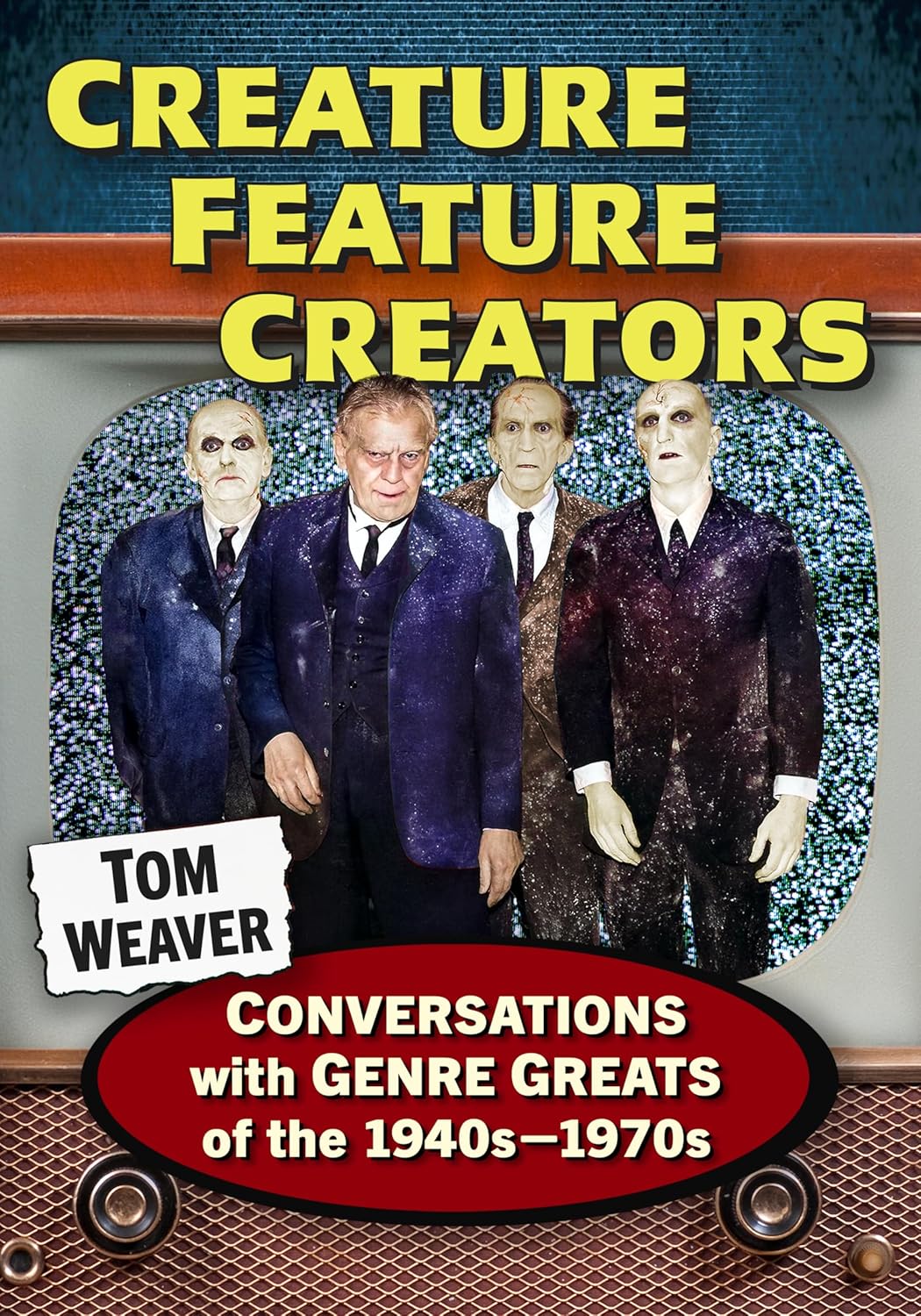
Creature Feature Creators by Tom Weaver
Those who have relished Tom Weaver’s lively and informative interviews with a variety of genre creators over many years (and in many books), will need no persuasion to pick up this toothsome latest volume, subtitled ‘Conversations with Genre Greats of the 1940s – 1970s’. The best known names here include filmmakers Roger Corman and John Landis, but Weaver’s reach is, as ever, wide – including a fun interview with one of the earliest of Lois Lanes, Noel Neill, who played the doughty reporter girlfriend of Superman in the long-running television series. But every interview here has something to offer, and there is always a particular pleasure with one of Weaver’s books: encountering someone with whose work one might be only vaguely familiar – and the effect – as always – is to send one out to look for their films. Creature Feature Creators is Tom Weaver on typical form – and that’s all that it is necessary to say.
Creature Feature Creators by Tom Weaver is published by McFarland
Essential Blu-Rays from Hammer, 88, Eureka & StudioCanal
Barry Forshaw
THE CURSE OF FRANKENSTEIN 4K, Terence Fisher director/Hammer Films
Any praise that I offer for this spectacular deluxe 4K sprucing up of The Curse of Frankenstein, the film that essentially started the Hammer revolution should perhaps be tempered by the fact that I am a contributor to one of the commentaries (along with Kim Newman, Stephen Jones and other colleagues). But objective or not, this is a collector’s set to end them all, with six discs: two ultra high def and four Blu-rays, along with an absolute cornucopia of special features. The Curse of Frankenstein — at a stroke — established Terence Fisher as the de facto director of such product for the studio, although critical respectability was not to come to much later; but there can be few directors who went so firmly from being journeyman directors to authentic auteurs. What is perhaps most astonishing about the unified elements of this first Hammer colour film is just how many of the important constituent elements are already in place – and, what’s more, functioning from the off at the top of their game. There is Fisher, of course; the writer Jimmy Sangster (whose first major Gothic enterprise for the company this was – and who produces a stripped-down scenario some considerable distance from Mary Shelley but absolutely utilitarian and at the service of the film Fisher and his associates wanted to make); the composer James Bernard, with an effective score, albeit lacking anything as distinctive as the plangent leitmotif he was to compose for the subsequent Dracula; the cinematographer Jack Asher, responsible as much as any other member of the creative crew for forging a strong visual identity for the film and its successors; and production designer Bernard Robinson, whose particular skill was to manufacture a facsimile of sumptuousness on extremely restricted budgets. While Hammer Films rarely have the air of spaciousness of their Universal Studios predecessors, the British studio’s more confined spaces are dressed in the most creative and evocative of fashions, affording a pleasure as keen as anything else within the film. And notice that I haven’t mentioned Peter Cushing and Christopher Lee – is it really necessary? Whether you are new to the film or a long-time admirer, this highly tempting package is now the default way to experience it.
THE DIABOLICAL DR Z, Jess Franco, director/Eureka
This early voyage into the horror genre by cult director Jess Franco is presented here in a splendid new transfer, and it looks better than this elusive film ever has. A Spanish/French coproduction, The Diabolical Dr Z is graced with a screenplay by no less than Jean-Claude Carriere (celebrated for his work with the great Luis Bunuel) in which a mad scientist forges a device that allows him to take control of human minds – the Dr ‘Z’ or Zimmer of the title whose death is avenged by his implacable daughter. Following his international breakthrough with The Awful Dr. Orloff, Jess Franco next delivered a startling pair of crime-thrillers that riffed on European notions of crime film. The director of over 100 films, Franco has engendered a huge worldwide cult following for his output, even the ramshackle ones (and there are plenty of those), and here is the perfect opportunity to submit yourself to a key movie, strikingly shot.
EVIL LAUGH, Steven Baio, director/88 Films
if you thought that every nook and cranny of the slasher genre had now been explored and excavated by the DVD/Blu-ray industry, think again: here’s another obscurity which apparently had extra sequences of gruesomeness shot in order to enhance its saleability. Needless to say, this disc is the uncut version, as is the norm these days.
JACOB’S LADDER, Adrian Lyne, director/StudioCanal
The disturbing Adrian Lyne thriller Jacob’s Ladder stars Tim Robbins, Danny Aiello, Ving Rhames and Elizabeth Peña, and appears here in a welcome new 4K restoration, courtesy of StudioCanal. Writer Bruce Joel Rubin scored a success with the screenplay for Ghost, and provides an ambitious scenario here in which Robbins plays a Vietnam vet living in New York who is plagued by hallucinations. The nightmarish visions are well handled by Lyne and Robbins, the latter providing a rich and interesting character study. Another plus for the film is an uncharacteristic score from Maurice Jarre, darker and more threatening than his usual fare.
THE BETRAYAL, Tokuzo Tanaka, director/Radiance
In Tokuzo Tanaka’s remarkable drama, a samurai who is trying to live according to the ideals he is devoted to finds himself estranged from his colleagues and, accordingly, vulnerable. Taking on his own shoulders the negative behaviour of others, he is exiled for a year before he may be brought back into his clan’s embrace, but as the title suggests, betrayal is the name of the game, and he is soon a hunted quarry. This is a mesmerising piece with performances that are more understated than is customary for the genre. Visuals, too are skilfully realised.
SS EXPERIMENT CAMP, 4K UHD + BD Sergio Garrone, director/88 Films
Italian exploitation films remain a peculiar subsection of cinema, particularly those which deal with the difficult subject of the Nazi era. This is one of the most famous – or should that be notorious? –entries in the field, and is delivered unblushingly although (obviously) it will not be to every taste. If you are an admirer of filmmakers stretching the boundaries of what is acceptable, Garrone’s extreme film may already be on your radar.
New from Second Sight, Radiance, Indicator, Eureka, 88, Arrow et al
MEGAN 2.0, Gerard Johnstone, director/UNIVERSAL
To say that the first film in the Megan franchise hit the ground running would be something of an understatement – the beguiling killer android immediately became a firm genre favourite. Almost inevitably, follow-ups to considerable successes such as this latest iteration burn at a lower flame — but that is very much not the case with this latest entry. Megan 2.0, while adding new frissons, cleverly balances elements of humour and horror. And speaking of the horror, this new Blu-ray from Universal (which arrives in an eye-poppingly spruce edition) also includes the unrated version of the film for those with a taste for the macabre at its most untrammelled – certainly what we get here. There are also along with the gruesome thrills and examination of the direction which AI is travelling – and the human characters, so often the neglected element in modern horror films – are strongly developed. A winner from Universal.
DANS MA PEAU/IN MY SKIN, Marina de Van, director/Radiance
David Cronenberg has been invoked as the yardstick for this one, and the deeply unsettling tone achieved by Marina de Van is in Croneneberg-like vein. Self-mutilation and a dark sexual quest are at the heart of this uncompromising and unflinching movie, with a striking and brave performance by de Van herself.
POSEIDON 4K, Wolfgang Petersen, director/Arrow
The 1970s disaster movie wave may have passed into history (or at least been subsumed into contemporary mainstream cinema), but older audiences remember these often absurd but highly entertaining spectacles with affection. One of the very first was The Poseidon Adventure, and it takes a certain amount of cheek to take on that now celebrated title and do something different with it – but that is precisely what Das Boot director Wolfgang Petersen has done here. The result is markedly different from the original, but it’s a spectacular diversion, with exhilarating stunts.
TALK TO ME, Danny & Michael Philippou, directors/Second Sight Films
This is genuinely unsettling fare, directed by Danny & Michael Philippou and acted with a rigour and forcefulness which is rarely seen in the genre. This debut effort for the two directors landed securely, quickly establishing a reputation. The plot involves a group of teenage friends who unwisely adopt a bizarre new party craze that utilises an embalmed hand to open the door to the spirit world. Needless to say, the results are inevitably lethal. The authoritative directing duo have at their disposal a particularly adroit cast well in tune with their macabre vision.
SUNSET WARRIORS, John Woo, director/88 Films
Director John Woo’s energetic channelling of film technique burst upon the scene with what can only be described as a detonation, and even before his sojourn in Hollywood, viewers had become familiar with his notably kinetic oeuvre. Sunset Warriors already has all of his familiar trademarks, such as bursts of action that are both highly improbable and highly exhilarating. As usual with 88 Films, the transfer here is impeccable.
OBJECT Z, Daphne Shadwell, director/BFI
How many modern viewers of a certain age will remember this intriguing curiosity? While other television science fiction of the era is fondly remembered and celebrated (notably Nigel Kneale’s Quatermass series), Object Z is known only by reputation. It is a six-part serial composed of half-hour episodes shown in the timeslot traditionally aimed at children, teatime, on Rediffusion TV. In fact the scriptwriter, Christopher McMaster, cleverly pitched his scenario in such a fashion that it might appeal to a youthful and mature audience – as indeed it did. A strange object is heading towards the earth, threatening the destruction of all life on the planet (in not-dissimilar fashion to George Pall’s film When Worlds Collide). What follows is — despite the limitations of the technology of the day – a serious attempt to convey a growing sense of disaster with some strong and authoritative performances. Outrageous plot twists keep the level of interest high and this is a welcome issue from the BFI.
PERPETRATOR, Jennifer Reeder, director/Arrow
Aficionados of the horror genre are becoming harder and harder to please, and it takes a director sporting both traditional inventiveness and a fresh eye to invigorate their entries and lift them above the rut. Jennifer Reeder is such a filmmaker, and Perpetrator is the perfect shop window for her wares. This is an accomplished piece of work, and resounding proof that Reeder is a director to be watched – even by male viewers, though the ethos here is firmly feminist and directed against male predators. The narrative is in the form of a coming-of-age drama with elements of the serial killer and supernatural fantasy fields. In terms of the film’s colour palette, comparisons have already been drawn to the surrealist colour schemes of the great Italian director Mario Bava, strikingly realised here by director of photography Sevdije Kastrati.
THE CONJURING, James Wan, director/Warners 4K
The remarkable success of The Conjuring franchise no doubt owed a lot to its initial impetus, launching one of the highest grossing horror franchises to date under the skilful direction of James Wan. In this first outing, a family with multiple daughters is menaced by an eldritch force. The director’s manipulation of tension and shock is assured, and the homages to earlier classic examples of supernatural terror are well integrated. Sceptics will not be persuaded by the fact that the film is supposedly ‘drawn from the (real life) case files of married demonologists Ed and Lorraine Warren’. But that hardly matters – in the same way the fact that the film of The Amityville Horror claimed to be from an actual case was speedily forgotten as the franchise proceeded. Those of us who love supernatural chills don’t really need to believe in them – except for the duration of the film. The Conjuring stars Vera Farmiga and Patrick Wilson as the Warrens, and Ron Livingston and Lili Taylor as Roger and Carolyn Perron, residents of the cursed house.
PREY, Norman J Warren director/88 Films
Here’s a film for which I provided a booklet essay. In the glory days of British horror movies of the 1970s, the late Norman J. Warren’s maverick endeavours were an unsung asset of the field, and only the afterlife of such grisly gems as Satan’s Slave, Terror and Prey have given him the reputation he deserves as one of the most hardworking and energetic directors this country has produced, however haphazard he frequently is. Prey is an intriguing riff on another popular film — the source here is DH Lawrence’s The Fox: we have the warring lesbian couple, their union disrupted by predatory mail interloper, and Warren even has a fox in his Prey scenario. The interloper here, however, is an alien – who, as Norman J Warren himself rightly points out, looks more like a werewolf than a visitor from another planet. (Solid performances here, and if the budget doesn’t run to a single special effect shot of the alien’s interstellar craft, there is still a nicely-tuned sense of strangeness..
RED PLANET, Antony Hoffman, director/Arrow
The title Red Planet may suggest a rabidly anti-Communist film of the 1950s, the sort that is now seen as a notorious example of the ‘Red Scare’ phenomenon. But this more recent science fiction outing directed by Antony Hoffman is a very different kettle of fish, and belongs in what might now be seen as the Gravity school of filmmaking in which the variety of menaces encountered by adventurous astronauts on alien worlds is more science-based, avoiding the more outrageous elements of the SF genre. The conflict between beleaguered spaceship captain Carrie-Ann Moss (most celebrated for her memorable apearances in the Matrix franchise) and her uppity crew is handled with confidence, and overfamiliar elements are suitably spruced up (the meteor shower that invariably besets space travellers and throws everything into chaos is here replaced by solar flares, producing exactly the same problems). Special effects are not quite up to the seamless quality of more recent movies, but still have a genuine sense of awe.
MARTYRS, Pascal Laugier, director/Eureka
Aficionados of more extreme horror films realised that they might truly test their mettle with the rigorous endurance test that was Pascal Laugier’s remarkable Martyrs, a film made with devastating command of the medium which many more squeamish viewers admitted they couldn’t get through. The subsequent Incident in a Ghostland was less gruelling, but showed that the director had not lost an iota of his authority when it comes to stretching the nerves of the viewer. Martyrs, needless to say, is not for the faint-of-heart.
THE BETRAYAL,Tokuzo Tanaka, director/Radiance
In Tokuzo Tanaka’s remarkable drama, a samurai who is trying to live according to the ideals he is devoted to finds himself estranged form his colleagues and, accordingly, vulnerable. Taking on his own shoulders the negative behaviour of others, he is exiled for a year before he may be brought back into his clan’s embrace, but as the title suggests, betrayal is the name of the game, and he is soon a hunted quarry. This is a mesmerising piece with performances that are more understated than is customary for the genre. Visuals, too, come up stunningly, and are outstandingly realised..
THE SHADOW ZONE, J.S. Cardone, director/88 Films
As a group of NASA hypersleep researchers undergo tests in an secluded underground facility in the Nevada desert, one participant dies during the experiment. NASA assigns Captain Hickock (David Beecroft) to look into the death, and what he discovers leads to a series of horrifying events The scientists, under the control of Dr. Erhart (played by a mature Louise Fletcher, so memorably sinister in One Flew Over The Cuckoo’s Nest as Nurse Ratched) has breached the boundaries of dream-state sleep and opened the door into a parallel dimension with grim and surreal results. this is unusual fare; a film accomplishes its modern modest aims with some style.
LOST IN SPACE, Stephen Hopkins, director/Arrow
Big budget remakes of television successes are often a mixed bag, but while this lavish SF attempt met with a mixed response, it certainly delivers the goods in terms of its science fiction effects. it’s hard to remember a time when aficionados of the genre had to be content with SF items appearing at staggered intervals – although there was one era rather similar to our own: the late 1950s and early 60s, when the SF genre was highly popular, and audiences flocked to see both high and low budget movies. As this latest Lost in Space proves, special effects nowadays have moved on by a quantum leap.
WHO? Jack Gold, director/88 Films
And another intriguing film for which Kim Newman and I furnished a commentary. Jack Gold’s Who? is an accomplished science fiction entry based on a cult novel by Algis Budrys and concerns an American scientist returning from a car crash in Russia with what appears to be a metal head and a serious doubt as to his identity. Elliot Gould and Joseph Bova work together well as an intelligence man and the mysterious scientist, but as so often, it is the ever reliable Trevor Howard who walks away with the acting honours.
Coming from Hammer: THE CURSE OF FRANKENSTEIN 4K, Terence Fisher, director
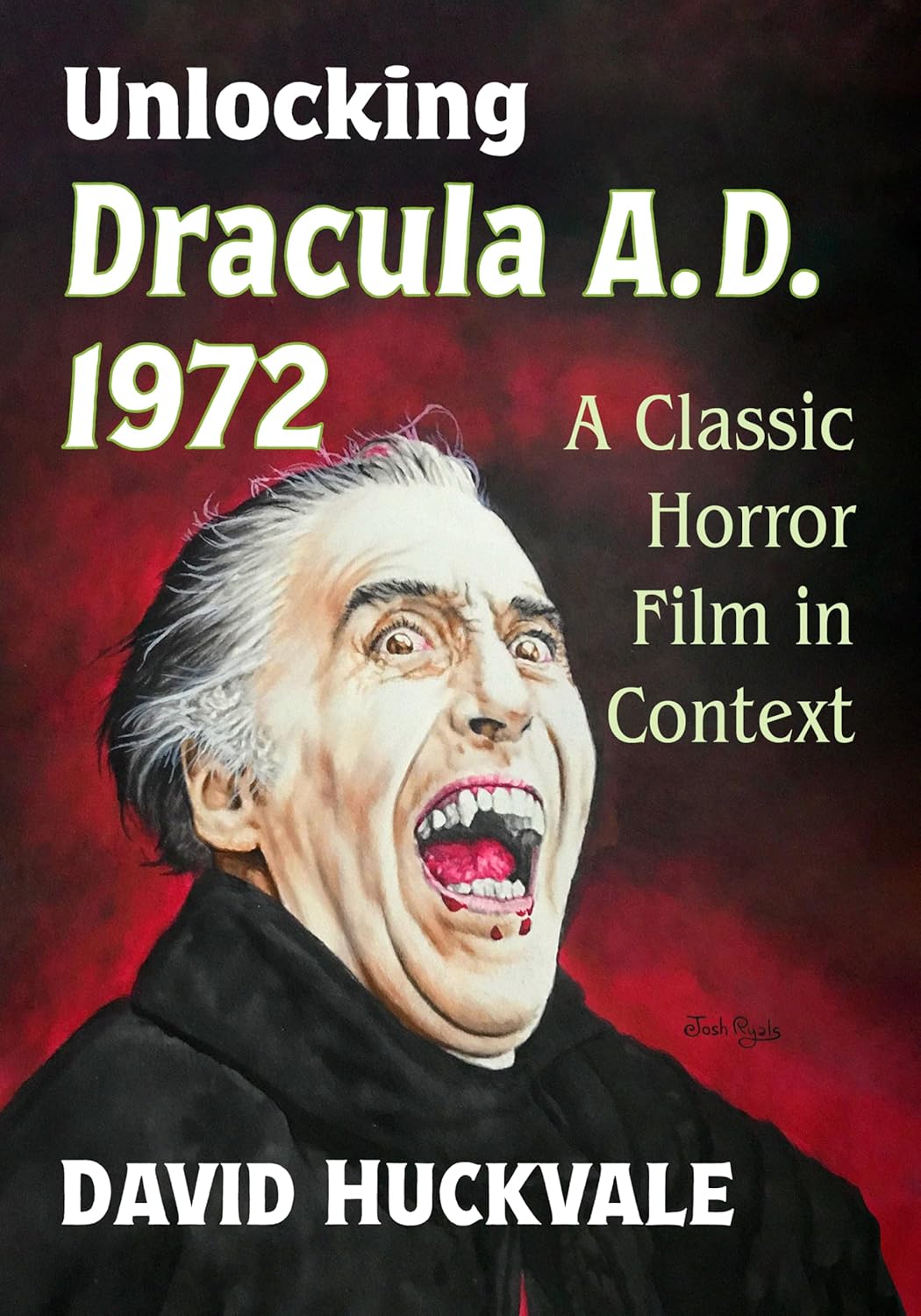
Unlocking Dracula A.D. 1972 by David Huckvale
Barry Forshaw
Speaking to the multi-talented David Huckvale recently about what he was working on, I suspected our amiable conversation might be challenged by his answer. ‘I’m writing a book about Dracula A.D. 1972’, David replied. I responded wryly that he would have his work cut out for him, writing about a Hammer film which (along with Scars of Dracula) is hardly on anyone’s favourites list when it comes to Hammer’s outings for the vampire Count. He smiled at my response, obviously convinced that when I’d read his book I’d revise my unenthusiastic opinion regarding the film. David — who has worked as researcher, writer and presenter of BBC radio as well as lecturing at a variety of universities — is also the premier UK expert on film music. He records (as do I) a variety of extras for Blu-rays of celebrated horror films, so who better than him to make the case for a neglected film such as Alan Gibson’s entry in the Hammer Dracula cycle in which the Coubnt does little more than some low-key skulking? Well, in the event (and unsurprisingly) Mr Huckvale is the perfect conduit. He tackles Dracula A.D. 1972 forensically, taking on-board political, social and cinematographic aspects of the film and exploring a variety of themes (including, startlingly, the psychogeography of the Chelsea neighbourhood where the film takes place). even making a case for Mike Vickers’ score which is counterintuitive, given his notable admiration for composer James Bernard when it comes to scoring Christopher Lee’s nocturnal outings. David has produced a truly persuasive piece of work – and while not quite changing my mind, he has sent me back to the film with a new attitude. You can bet that the next time I watch it, I’ll be rereading (as an adjunct) David’s impressive study.
Unlocking Dracula A.D. 1972 by David Huckvale is published by McFarland
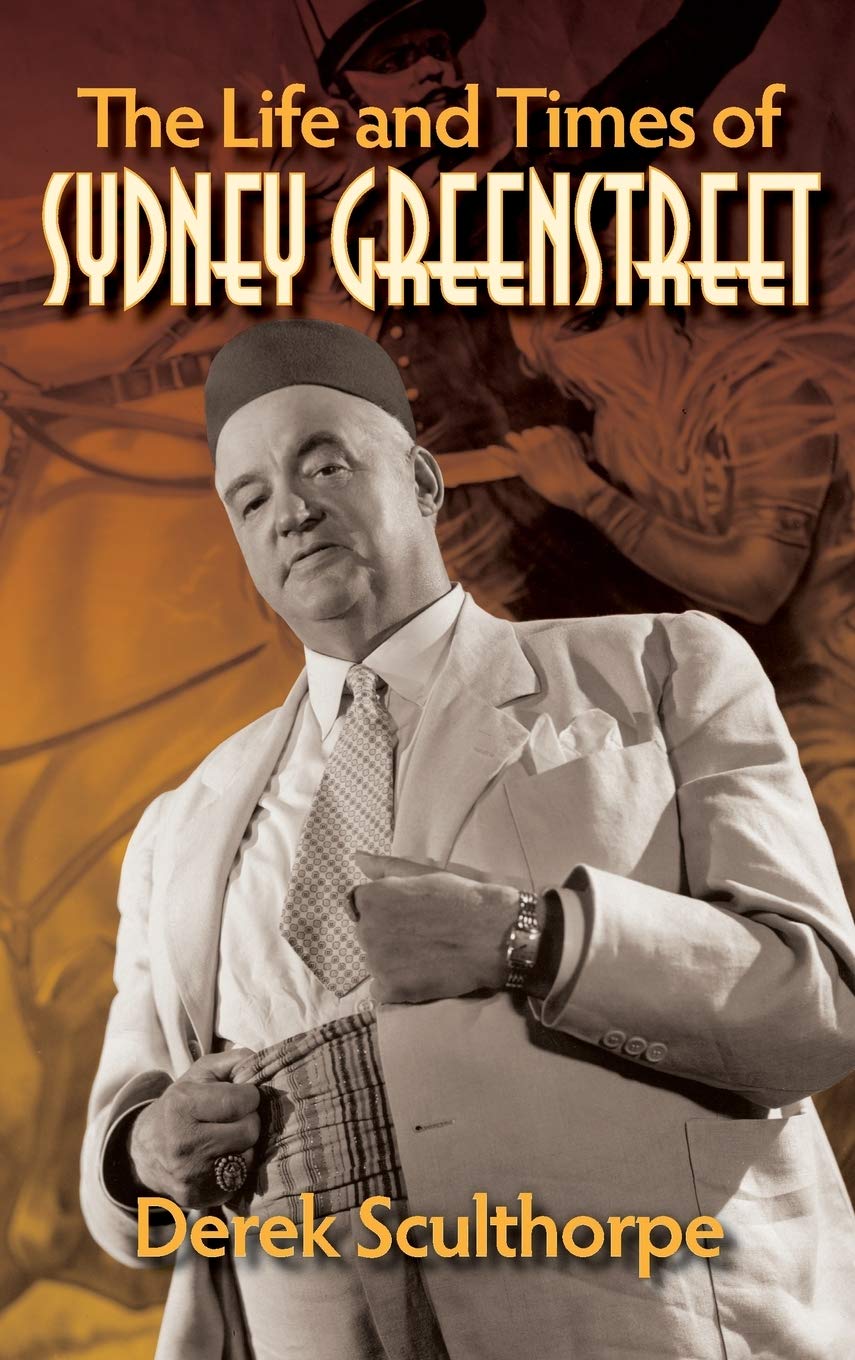
The Life and Times of Sidney Greenstreet by Derek Sculthorpe
The history of cinema is enriched by a variety of actors whose speciality was the villain, and some actors have made an indelible mark in that respect. The British Isles have produced more than their share of exemplary screen heavies from Boris Karloff and Basil Rathbone to Christopher Lee (casting that often relates to the supposedly ‘foreign’ aspects of their appearance) and many would make a case for the portly Sydney Greenstreet as one of the most distinctive. He was a late starter, making a striking debut as the avaricious Kasper Gutman in John Huston’s The Maltese Falcon in 1941. It’s surprising to be reminded in Derek Sculthorpe’s biography that Greenstreet’s screen career lasted only eight years but included not only the Huston film but what many consider to be among the greatest films of the 1940s, Michael Curtiz’s Casablanca (1942), not to mention Greenstreet’s multiple pairings with another equally memorable screen villain, Peter Lorre. This is in fact the first book dedicated to the actor, and features over a hundred photographs. It’s unlikely to be bettered as an adroitly written study of a very memorable actor.
The Life and Times of Sydney Greenstreet by Derek Sculthorpe is published by Bear Manor
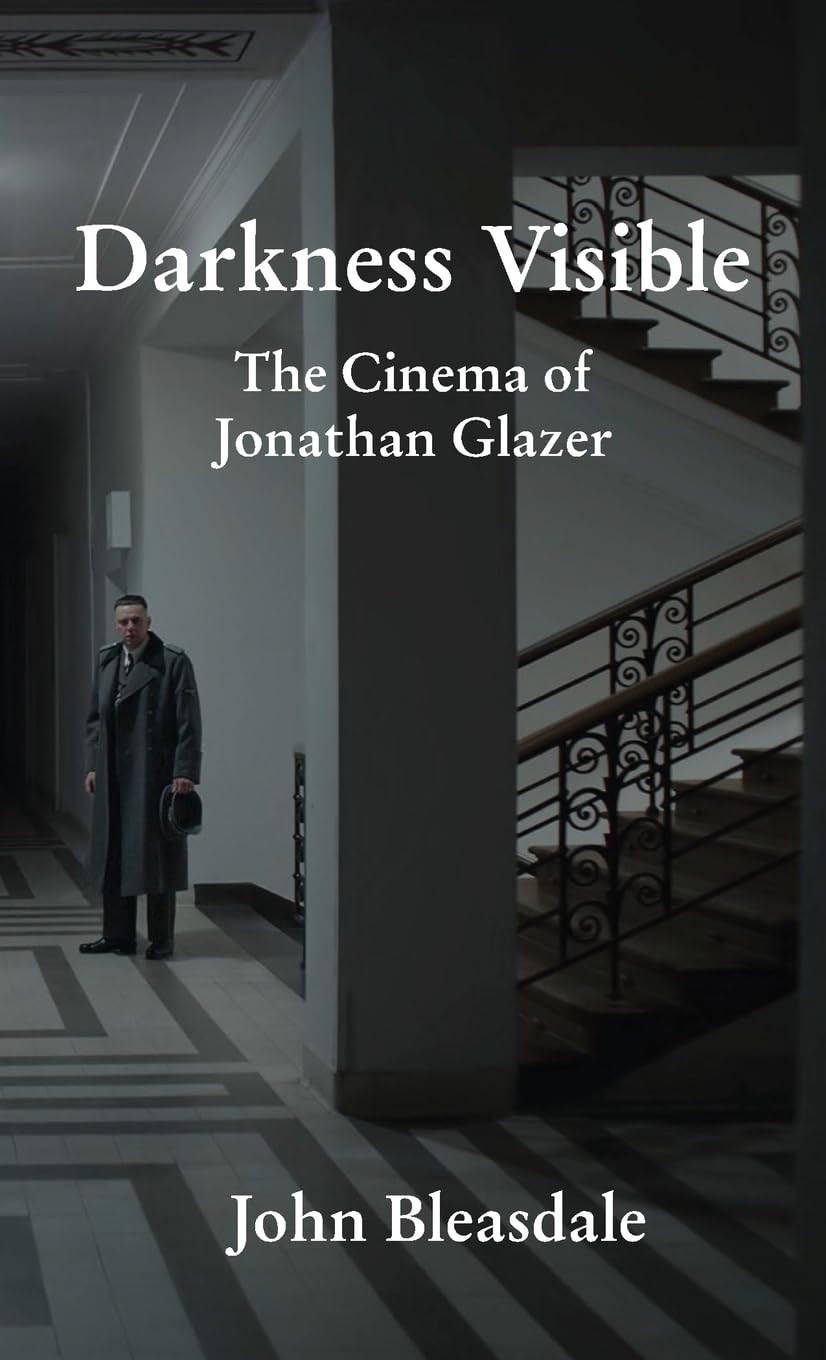
Darkness Visible: The Cinema of Jonathan Glazer by John Bleasdale
The writer John Bleasdale has long been one of the most perceptive and intelligent writers on contemporary cinema, and his new study of one of the key talents in the field is among his best work. The director Jonathan Glazer has created some truly memorable and unorthodox films, all of which to some degree have forged their own identities outside of the putative genre to which they belong. Sexy Beast, for instance, is a long way from a conventional crime saga, while Under the Skin tears apart the science fiction field to which it might seem to belong (not least through its erotic imagery). And The Zone of Interest is an examination of human evil very different from other treatments of the Nazi era. Bleasdale examines Glazer’s work in analytical but elegant prose, never attempting to reduce the director’s worldview to something consistent and predictable. And, refreshingly, Darkness Visible is a reminder of just how elegant and stimulating writing on the medium of film can be.
Darkness Visible: The Cinema of Jonathan Glazer by John Bleasdale Is published by Sticking Place Books
From Senso to Shrews: New from Indicator, Second Sight et al
Barry Forshaw
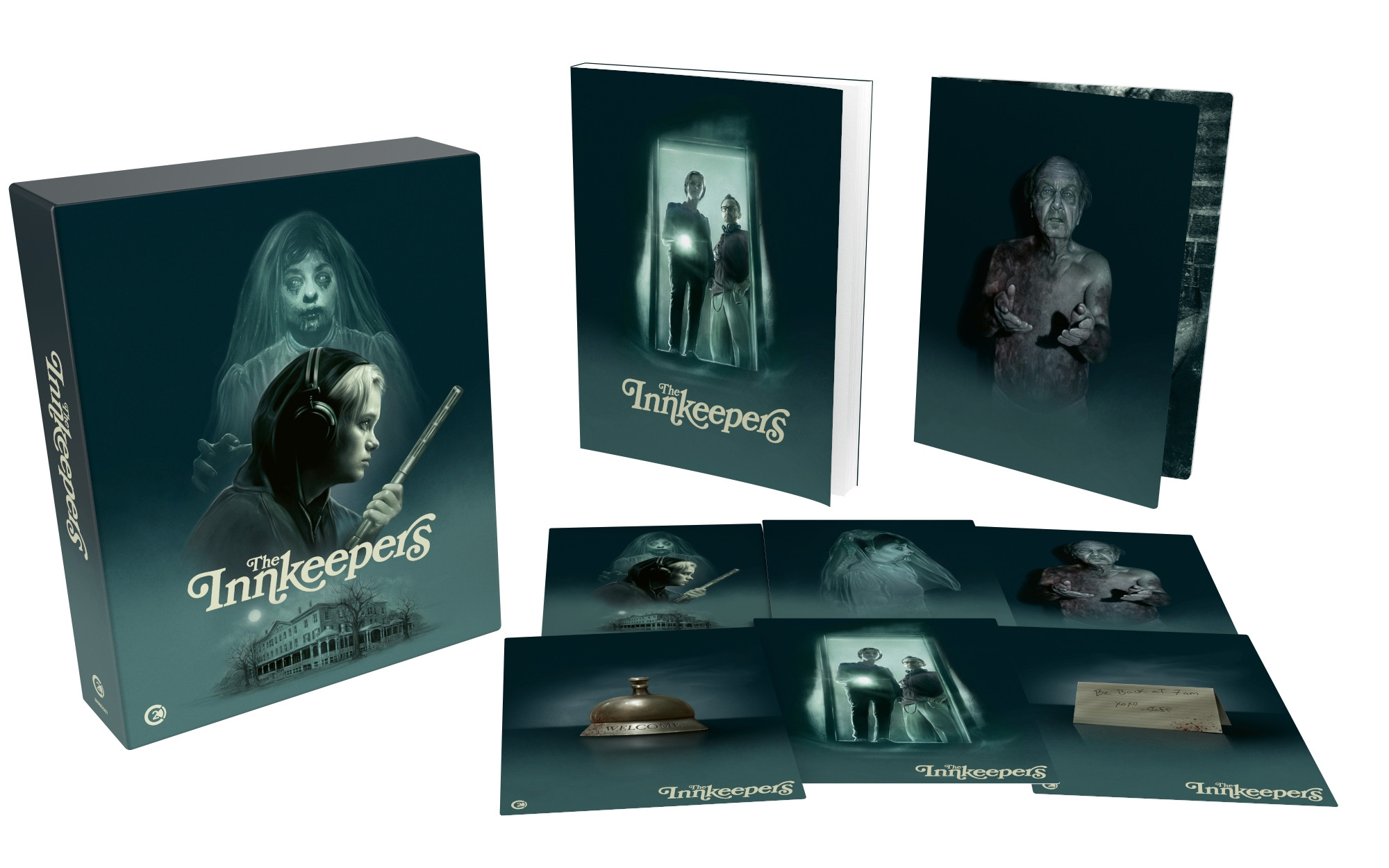
THE INNKEEPERS, Ti West, director/Second Sight
Let’s start with a disc for which I wrote a booklet essay. The Innkeepers is a curious, mesmerising mélange of elements reminiscent of other supernatural outings. There is the blighted location from Robert Wise’s The Haunting (1963) – or perhaps directly from Shirley Jackson’s original novel The Haunting of Hill House. There is the chalk-white face of a spectral female figure that can move with unnatural speed. And there are the strategies of the ‘found footage’ genre: the shot of an apparently innocuous room is held for an audacious amount of time until the viewer begins to nervously scrutinise every inch of the frame, expecting something unpleasant to appear. The Second Sight transfer is exemplary.
SENSO, directed by Luchino Visconti/Radiance
Senso (1954) was, for many years the Holy Grail of Italian cinema – until recently, how many people under 50 had seen Visconti’s lush, visually stunning masterpiece, unavailable for so many years? Now available re-mastered and looking absolutely ravishing, Visconti’s film is set in 10th century Venice and features Farley Granger and Alida Valli in a tragic drama. Wonderful to finally see it! Luchino Visconti had been a key contributor to the neorealist movement, produced his greatest work of personal cinema in The Leopard (Il Gattopardo, 1963), a massive, elegiac masterpiece (much mutilated in its day by its distributors), which enshrined wonderful performances by Burt Lancaster (as De Lampedusa’s doomed aristocrat), Alain Delon and Claudia Cardinale. The film, which is only now available in the form that the director intended can be seen as one of his greatest works, but this splendid new Radiance issue of Senso shows that the later film had impressive antecedents.
THE CONJURING, James Wan, director/Warners 4K
The remarkable success of The Conjuring franchise no doubt owed a lot to its initial impetus, launching one of the highest grossing horror franchises to date under the skilful direction of James Wan. In this first outing, a family with multiple daughters is menaced by an eldritch force. The director’s manipulation of tension and shock is assured, and the homages to earlier classic examples of supernatural terror are well integrated. Sceptics will not be persuaded by the fact that the film is supposedly ‘drawn from the (real life) case files of married demonologists Ed and Lorraine Warren’. But that hardly matters – in the same way the fact that the film of The Amityville Horror claimed to be from an actual case was speedily forgotten as the franchise proceeded. Those of us who love supernatural chills don’t really need to believe in them – except for the duration of the film. The Conjuring stars Vera Farmiga and Patrick Wilson as the Warrens, and Ron Livingston and Lili Taylor as Roger and Carolyn Perron, residents of the cursed house.
TALES OF ADVENTURE, COLLECTION 5, various directors/Imprint
There are many virtues to what may now be called to Blu-ray revolution – principally the making available once again of some films which cinéastes have been longing to see. But there is also what might be called icing on the cake: the anthology box in which a variety of movies may be found. Take, for example, Tales of Adventure: Collection Five from the always enterprising Imprint label. This set has an intriguing mix of classic and not-so-classic science fiction films, all of which will be tempting to the aficionado – particularly some little-seen items. There are two clear winners: Joseph Newman’s This Island Earth is one of the most splendidly colourful SF films of the 1950s: intelligently written and intriguingly plotted (with a creative hand involved in its making – although it has been open to some dispute — of the greatest director of 1950s science fiction films, Jack Arnold). The other winner here is Devil Girl from Mars which is that unusual thing: a British science-fiction camp classic. It’s also a film for which Kim Newman and I provided an affectionate commentary, to be found on the film in this set. The complete list of inclusions: The 27th Day (1957), The Night The World Exploded (1957) — a worldwide first on Blu-ray, This Island Earth (1955), Devil Girl From Mars (1954), The Gamma People (1956) – another worldwide first on Blu-ray. There is also a bonus film, The Underwater City (1962, in standard-definition). There are also copious special features in a limited edition hard case.
THE HAUNTED HOUSE OF HORROR, Michael Armstrong, director/88 Films
Aficionados of the British horror film have an affection for an outing from producer Tony Tenser’s company Tigon which now resembles something of a harbinger of the latter-day menaced teenagers/slasher film, Michael Armstrong’s The Haunted House of Horror (1969), notably gory for its day, in which the ghost of another film may be seen imprinted on the DNA of the concept. A polyglot multi-national cast is headed by American pop star Frankie Avalon (playing a teenager at 30), with a slew of British actors later to make their mark in TV sitcoms (including Richard O’Sullivan) and another pop singer, the UK’s Mark Wynter (whose version of “Venus In Blue Jeans” may have been running through audience’s mind ashes as he is bloodily slaughtered in the film’s most memorable set piece) .As a group of youthful revellers are stalked and dispatched by an unseen knife-wielding psychopath, the talented Michael Armstrong’s instinct sometimes guide him in interesting directions (his original concept was apparently more surrealistic and non-linear, and the film was tampered with), although casting (such as the actor Julian Barnes – not the novelist — in a key part originally intended for David Bowie) did not please the director. The final tense confrontation with the soon-to-be-unmasked murderer (in which a phallic knife rises slowly between two survivors, with audiences uncertain as to who is holding it) is still memorable
HMS DEFIANT, Lewis Gilbert, director/Indicator
The actor Dirk Bogarde had shown himself more than ready to risk his image as a matinee idol in the groundbreaking Basil Dearden film Victim, playing a bisexual lawyer being blackmailed, and he was similarly ready to take on the unsympathetic parts — as in this full-blooded naval drama. In HMS Defiant, Bogarde is the sadistic second officer on the eponymous ship set against Alec Guinness’s more humane captain. To some degree, the film is a an inversion of the narrative structure of Mutiny on the Bounty, and it is Guinness who walks away with the final acting honours. But Bogarde still delivers exactly what is required for his martinet character. Indicator’s transfer of this powerful tale of mutiny at sea is directed by the respected Lewis Gilbert from a screenplay by Edmund H North and Nigel Kneale; the presence of the latter is further proof that there was far more to the writer than his signature Quatermass outings.
THE TAMING OF THE SHREW, Franco Zeffirelli, director/Indicator
Interest in the Elizabeth Taylor/Richard Burton offscreen romance was at its height when the director Franco Zeffirelli opted to make a film of Shakespeare’s The Taming of the Shrew, and healthy box office was guaranteed for this lively, unnuanced take. It goes without saying Burton delivers the Shakespearean verse with panache – both he and Taylor were acutely conscious of his status as Britain’s leading Shakespearean and heir to Laurence Olivier (a destiny sidelined by his successful film career), but Taylor is not outshone and delivers a full-throttle performance as the combative Katarina. Zeffirelli fills the screen with energetic movement and colour. If the controversial aspects of the play are not touched upon, that’s fair enough – this is not intended as a radical modern production but as a full-blooded traditional performance. Icing on the cake is the cinematography by the celebrated Oswald Morris and a score from Nino Rota.
PERPETRATOR, Jennifer Reeder, director/Arrow
this is a very accomplished piece of work, and resounding proof that Jennifer Reeder is a director to be watched – even by male viewers, even though the ethos here is firmly feminist and directed against male predators. The narrative is in the form of a coming-of-age drama with elements of the serial killer and supernatural fantasy fields. In terms of the film’s colour palette, comparisons have already been drawn to the serial list colour schemes of the great Italian director Mario Bava strikingly realised by director of photography Sevdije Kastrati.
THE BEAST TO DIE, Toru Murakawa, director/ Radiance
The always enterprising label Radiance continues its excavation of cult cinema with this intriguing and unorthodox piece, sporting a sustained menacing mood cannily orchestrated by director Toru Murakawa. A mentally disturbed war photographer (Yusaku Matsuda) is seeking for an accomplice in in crime with – inevitably – dangerous results. Radiance never stints on extras, and they here include new interviews with director Murakawa and writer Schoichi Maruyama along with a fresh piece on the film from Jordan Harper.
ROSA LA ROSE, Paul Vecchiali, director/Radiance
The Blu-ray revolution continues to make available films which have been seen by far too few people – and this intriguing entry certainly deserves greater currency than it has heretofore enjoyed. With a remarkable central performance by Marianne Basler (best known for Va savoir), director Paul Vecchiali furnishes a view of Paris quite unlike anything viewers will have experienced before. This 2K Restoration includes pertinent interviews and the usual slew of intriguing extra material.