

 Barry Forshaw
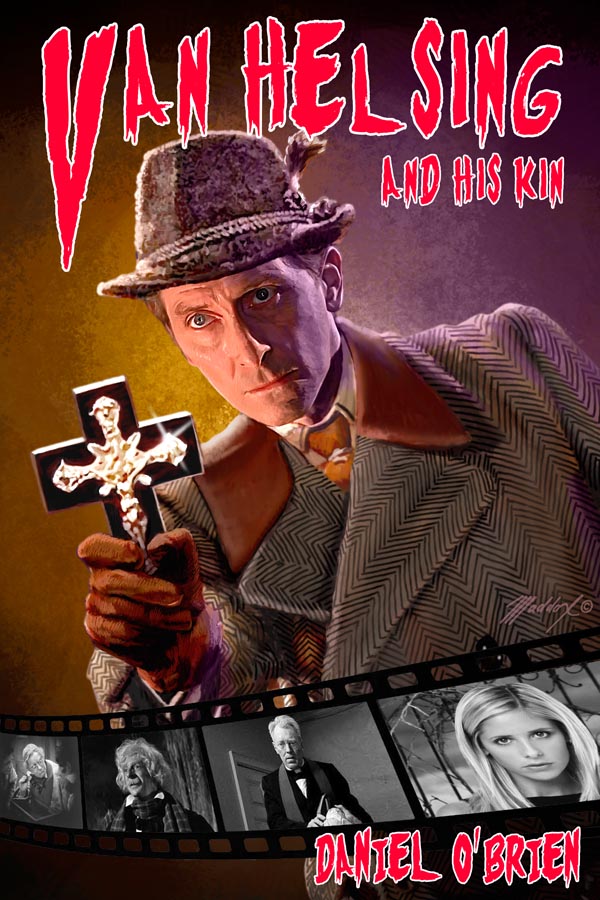
One might have thought that there were no areas of genre cinema which had been left untouched in terms of bookish studies (this writer has tackled a couple), but Daniel O’Brien seems to have a particular knack for finding subjects that invite investigation, as in his earlier book, Classical Masculinity, discussed below. The new one, Van Helsing and his Kin, takes a highly unusual premise and forges a scholarly but totally accessible study of an unusual subject. Van Helsing, of course, is the vampire hunter of Bram Stoker’s 1897 novel Dracula, and while people will be familiar with his bloodsucking nemesis, Van Helsing has long been the template for the forces of good ranged against those of evil. But as O’Brien notes, his progeny are many, extending even to Buffy, a vampire hunter of the modern generation. However, there is a positive army of such figures, and they have been played by actors from Edward Van Sloan and Peter Cushing as perhaps the cinemas Best known incarnations of the Figure and played by actors from Laurence Olivier to Hugh Jackman. The variety of iterations stretches far and wide, and in a book of 320 pages, O’Brien’s coverage is truly impressive – as is, of course, his informed and enthusiastic analysis of both ‘respectable’ and cheapjack versions of the character. It’s a fascinating read for those interested in the horror genre.
I wrote of O’Brien’s earlier Classical Masculinity and the Spectacular Body on Film: The Mighty Sons of Hercules : ‘Forget the unwieldy title and just marvel at the fact that academic writing on film can be as lively and stimulating as this! Daniel O’Brien — whose knowledge of Italian genre cinema is nonpareil — produces a remarkably allusive study of the cinema’s treatment of the muscular male physique (with particular attention to the Hercules movies directed by such talented auteurs as Vittorio Cottafavi and Mario Bava, as well as lesser talents such Pietro Francisci, responsible for the two Steve Reeves Hercules movies). O’Brien examines the fascinating subtexts of this oft-despised genre and its contradictory approaches to masculinity. What’s more, O’Brien performs a particularly impressive feat of prestidigitation, couching complex notions within prose that is always supremely readable.’
Van Helsing and His Kin by Daniel O’Brien is published by Telos