Barry Forshaw
SALÒ, Pier Paolo Pasolini, director/BFI
In terms of pushing boundaries, the late filmmaker Pier Paolo Pasolini had few rivals. His films created something of a censorship stir in their day with the earthiness of the sexual depictions (including the odd unsimulated encounter). Pasolini’s truly scandalous magnum opus, however, in terms of graphic, twisted sexuality, though, is the much-banned Salò, or the 120 Days of Sodom (1975). For a long time, the very title of Pasolini’s film was an index of the unacceptable in cinematic excess – a film so disturbing in its uncompromising violence and perverted sexuality that it seemed as if it would forever have censorship problem. The horrors of the last reel were famously among the most unsettling ever put on celluloid, all the more disturbing for the director’s consummate skill. using sex as a metaphor for power. It is also a prophetic view of our contemporary corporate-run culture of consumerism. Drawing on the Marquis de Sade’s original novel, the film depicts the series of sexual tortures inflicted by four libertines upon a group of young men and women. Unavailable in Britain for many years, Salò was finally passed uncut by the BBFC in late 2000. Is it possible, even for film scholars, to regard Salò as an integral part of its controversial director’s oeuvre — or does its continuing notoriety mean that any consideration of the film demands that this most shocking example of Pasolini’s films be considered in isolation? Salò’s procession of good-looking, often naked young men — precisely the kind of available youths that Pasolini visited in the male red-light areas of Rome – reflects on his own life, not least, in fact, the violence of his death (at the hands of one of these young men) resulting in Salò being the director’s final film. Can Salò be read as a personal testament – Pasolini’s loathing of fascism and political conformity being writ large in the film — or do we read it as an ingenious modernisation of de Sade’s iconoclastic text, with a notably ambiguous layer of lip-smacking voyeurism? Catholic moralists were one of one of the much-relished establishment targets for the director (the film’s monstrous authority figures represent the state, the church and the judiciary, and are shown to possess in place of a moral compass an enthusiastic penchant for depravity of every kind), and religious commentators could barely contain their glee at the news that the ‘dissolute’ director had died at the hands of a member of the rough trade with whom he conducted commercial sexual transactions. This is the definitive iteration of the film, restored 4K (2160p), it is a UHD Blu-ray presentation in Dolby Vision (HDR10 compatible).
ICE CREAM MAN, Eli Roth, director/STUDIOCANAL
A new entry from Eli Roth, the confrontational director of Cabin Fever, Host and Thanksgiving. In some ways, Roth is something of a throwback to an earlier generation of horror directors, when the breed was considered subversive and dangerous – a syndrome less evident as the Draconian censorship of the genre has largely evaporated. This latest outing, lighter than its predecessors, still delivers the requisite gruesome material.
THE FRIGHTENERS, Peter Jackson, director/ARROW
Directed by Peter Jackson in 1996 and written in collaboration with Fran Walsh, The Frighteners sported a cast of eccentric character actors known more to the cognoscenti than the general public. Notably, these included John Astin, Dee Wallace Stone and R. Lee Ermey from Stanley Kubrick’s Full Metal Jacket (1987) – in exactly the same role as a bullying sergeant, but this time hectoring the ghosts in a cemetery. And there’s the very distinctive Jeffrey Combs – so memorable in Stuart Gordon’s Re-Animator (1985) – here given a nerdish haircut and encouraged by Jackson to entertainingly chew the scenery. But amidst all these lesser-known actors, Jackson cannily showcases his star, Michael J. Fox, much loved by audiences for his turns as Marty McFly in Robert Zemeckis’s Back to the Future trilogy (1985–90) and caught on film here some time before the actor’s debilitating illness. No longer a teenager, as he was in the Zemeckis trilogy (although he was in his twenties when he made those films), in The Frighteners Fox is on his way to be the mature actor that he would never really become on screen, channelling perhaps Harrison Ford’s similar transition from juvenile leads by playing an alienated private detective figure adrift in a world of the fantastic; In The Frighteners, Fox plays Frank Bannister, a small-town psychic who utilises spectral henchmen to hoodwink locals – until things go badly wrong. Produced by Robert Zemeckis, this release includes both the theatrical director’s cut and a copious collection of extras.
INTERVIEW WITH THE VAMPIRE: THE VAMPIRE CHRONICLES, Neil Jordan, director/WARNER
The cast alone – both at the time of the film’s release and today – whets the appetite: Tom Cruise, Brad Pitt, Antonio Banderas, Stephen Rea, Christian Slater and a youthful Kirsten Dunst adorn Interview with Vampire, now available for the first time in 4k resolution with a high dynamic range. At the time of the film’s original release, there was a curious dichotomy in the response to this starry cast. While audiences were guaranteed with such stars, there was a feeling that Anne Rice’s long-lived vampires required actors able to convey quite different qualities, but time has been kind to these performances and certainly the visual qualities of the film remain as striking as ever in the hands of the director Neil Jordan.
THE MONSTER SQUAD, Fred Dekker, director/ARROW
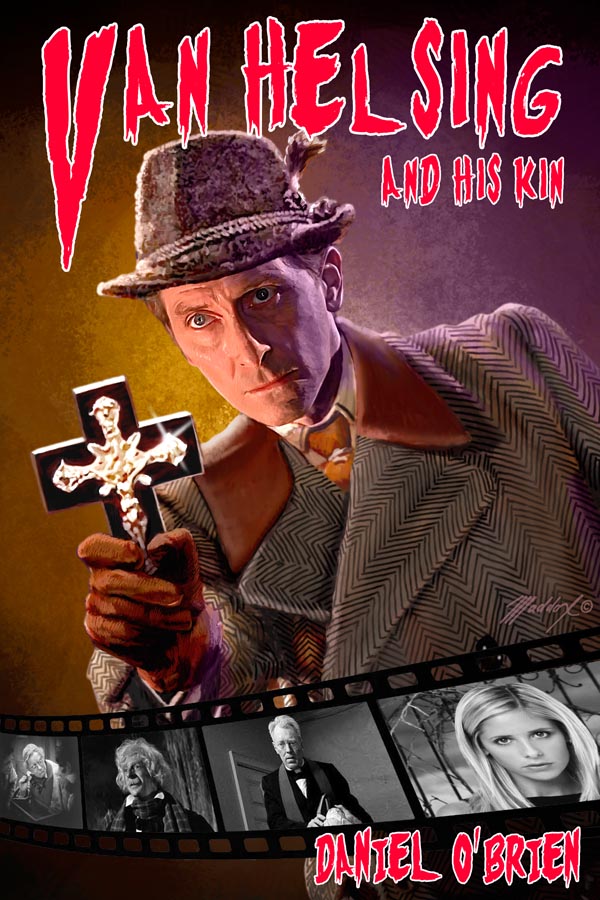
While perhaps receiving a mixed response on its appearance, there are devoted followers for this lively monster mash. In the past, Dr Abraham Van Helsing and a group of like-minded followers invaded Count Dracula’s castle with a cleansing intention. However, it wasn’t permanent, and a century later, Dracula is revived in the company of a werewolf, a mummy, a gill-man and even Frankenstein’s monster… but they have new juvenile opponents. This 2-disc edition features a full-length documentary co-written and directed by The Monster Squad star Andre Gower along with copious extras. This is a 2-disc set with a new 4K Paramount master in Dolby Vision/HDR10 along with a standard 1080p Blu-ray.
THE KILLING FIELDS Roland Joffé, director/SECOND SIGHT
The reputation of The Killing Fields, Roland Joffé’s remarkable and powerful film has grown over the years, and there will be a welcome for this limited edition Dual 4K UHD and Blu-ray release; the stain of Cambodia is still an issue that remains pertinent, and Joffé’s film functions as both a strong and disturbing drama as well as a social document of considerable forcefulness. Second Sight Films have issued Joffé’s masterwork in a Dual Limited Edition and Standard Editions
A CHINESE GHOST STORY TRILOGY, Ching Siu-Tung, director/ARROW
A Chinese Ghost Story had respected producer Tsui Hark putting together an ensemble of A Better Tomorrow II’s director Ching Siu-Tung, Peking Opera Blues writer Yuen Kai-Chi and charismatic stars Leslie Cheung, Joey Wong and Wu Ma for the high-octane-comedy A Chinese Ghost Story. The success of the film revitalised the 1987 Hong Kong box office, and was followed by two sequels. The boxed set features both new and archival extras for all three films.
EVIL DEAD, Fede Álvarez, director/STUDIOCANAL
The Evil Dead franchise created by Sam Raimi years ago has proved to have real staying power as the various offshoots and remakes have demonstrated – what’s more, the new iterations of the series no longer inspire the kind of hysterical censorship that the first film occasioned. Fede Álvarez’s 2013 standalone horror sequel using the original title – achieved sizable audiences, with lesser known stars Jane Levy and Shiloh Fernandez acquitting themselves well. The film makes its UK UHD debut with a 2-disc Collector’s Edition featuring a 4K restoration, new artwork by Krishna Bala Shenoy, the Theatrical and Unrated cuts of the film plus a generous selection of extras and a 64-page booklet.
OH WHAT A LOVELY WAR, Richard Attenborough, director/ EUREKA
Joan Littlewood’s unorthodox theatrical success was down to strange mélange of anti war feeling (not to mention considerable anti-military sentiment) matched with stirring performances of wartime songs. Richard Attenborough’s attempt to film a virtually unfilmable stage show has worn well, and its remarkable cast acquit themselves memorably.
DISCLOSURE DAY, Steven Spielberg, director/UNIVERSAL
The most successful director in modern cinema, Steven Spielberg, returns to one of his key themes: alien encounter. But this unusual new outing (scored in typically memorable fashion by Spielberg’s key collaborator in this area, John Williams) is very different from such films as Close Encounters of the Third Kind, and much depends on the central performance by the British actress Emily Blunt who is the strangely gifted conduit to the extraterrestrial visitors. The film’s strategies are more subtle and less dramatic than usual, but the director’s adroit treatment of his theme, shows that he has lost none of his touch.
THE SCREAMING SKULL, Alex Nicol, director/Eureka
Cinemagoers are used to memorable catchphrases utilised in the advertising which stay around as long as the films they promote (‘In space no-one can hear you scream’, coined by the late novelist Christopher Fowler for Ridley Scott’s Alien is a good example of this syndrome). Eureka Video have come up with an impressive one for this 1950s cult horror: ‘An eerie Gothic thriller that plays like a meeting between Daphne du Maurier and William Castle’. That perfectly encapsulates the narrative here in which a woman moves into her husband’s country mansion and finds some very dangerous phenomena, all of which is couched in the kind of enjoyably gimmicky scenario that the director William Castle specialised in. The transfer here is very impressive.
THE SINFUL NUNS OF ST VALENTINE, Sergio Grieco, director/INDICATOR
Before the phrase ‘nunsploitation’ was coined, such films were a familiar ingredient in enjoyable exploitation cinema, But this Sergio Grieco film is something a little more than that although many of the standard elements (including, of course, sex and all-stops-out violence.) are successfully integrated into a heady concoction, ably directed by Grieco. It’s an unsparing exploration of ecclesiastical corruption.
DOCTOR BLOOD’S COFFIN & THE SNAKE WOMAN, Sidney J. Furie, director/HAMMER
For those eager to find how the impressive career of the director Sidney J. Furie achieved such diverting entries as the film of Len Deighton’s The Ipcress File, Hammer Films – in their new iteration supplying splendid transfers of older material – provide two of the director’s earliest films, neither in fact produced by the Hammer Studios, but possessing some of the hallmarks of that studio.