

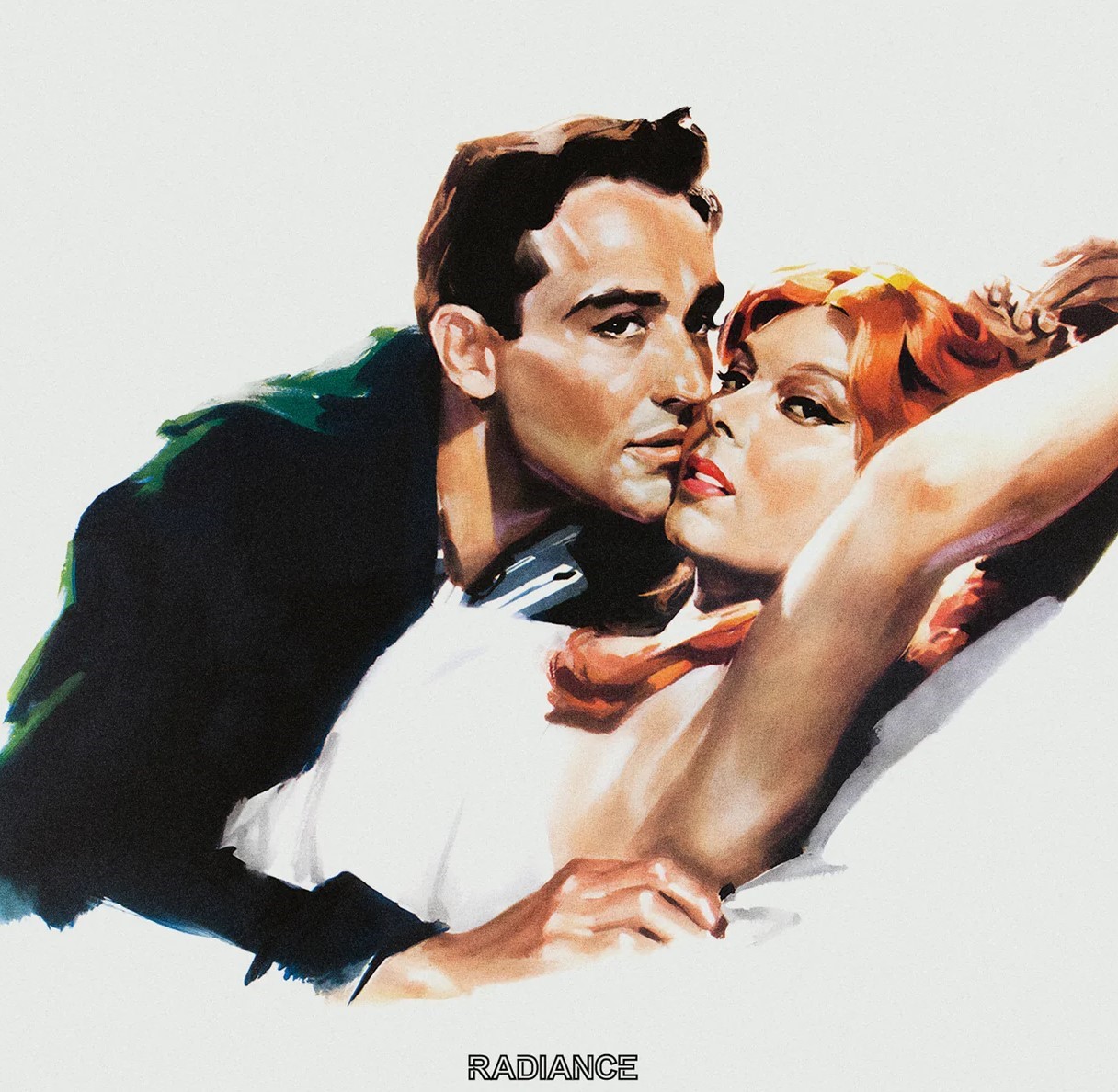
COMMEDIA ALL’ITALIANA: THREE FILMS BY DINO RISI/Radiance Films In the early days of the DVD revolution, cineastes were particularly grateful for the appearance of so much elusive material that they were keen to see – and not just films by giants such as Bergman, Antonioni and Resnais. Gradually, however, our gratitude was replaced by a desire to see the army of material that had yet to surface – and these days one company is particularly generous in making available once again neglected films that deserve their place in the spotlight. That company is Radiance Films, and with Commedia all’Italiana: Three Films by Dino Risi we are presented with some very cherishable items by a filmmaker whose reputation more than deserves a twenty-first-century burnishing. The films are 1959’s Il Vedovo, 1960’s Il Mattatore and 1962’s Il Sorpasso. Some distance from Italian neorealism, these sharply observed, beautifully played comedies come up fresh as paint, but their appeal is enhanced by the appearance of an actor who deserves much more acclaim than he receives these days: the great Vittorio Gassman. English-speaking audiences know him from some classic films but are often surprised to hear that he was a great Shakespearean on stage in his native Italy, and his acting chops are given full rein in Risi’s Il Sorpasso, not least with the contrasted underplaying of co-star Jean-Louis Trintignant.
BLOOD AND BLACK LACE, Mario Bava, director/Arrow 4K The camera prowls around the gaudy exterior of a fashion house lashed by rain and wind, its sign broken loose and swinging. One of the models, Isabella, is stalked through the stormy night by a masked assailant, who brutally murders her … If ever a film called out for the deluxe 4K treatment to showcase its visual splendour, it’s Bava’s delirious Sei Donne per l’Assassino/Blood and Black Lace (1964), which remains the most influential giallo ever made. In the UK, the availability of Italian-language prints have made it possible for viewers to feast on the visual delights afforded by chiffon, marble, and the director’s cat-like camera moving through the exquisitely decadent production design – the latter clearly as much the loving creation of the director as that of credited production designer Arrigo Breschi. British censor John Trevelyan took his scissors to the exuberant mayhem at the time of the film’s release, creating a cinematic coitus interruptus in which the elaborate orchestration of suspense becomes a prelude to frustrating, barely glimpsed pay-offs. However, the crippling censorship cuts that truncated every murder in the UK have long been restored, and the elegantly rendered tension is now unspoilt. Bava’s calling-card movie looks ever more gorgeous as the years pass and continues to be his most influential film after Antefatto/Bay of Blood (1971), whose catalogue of grisly murders was the blueprint for the Friday the 13th movies and their many imitators. Needless to say, characterisation is pitched at a generous level (no nuanced playing here), and it is the saturated colour, wonderfully excessive production design (redolent of 1950s recreations of Italian verismo opera productions) and energetically staged scenes of murder that maintain the viewer’s interest rather than any narrative rigour. If the film (and its many successors) possesses a vision beyond a desire to thrill and alarm the viewer, it’s a notably dyspeptic view of human nature, with venal instincts comprehensively outpacing the demands of the libido. The beautifully photographed sensuousness of the female victims is a smokescreen (as so often in the giallo genre) for a single-minded pursuit of filthy lucre. Perhaps the most immediate effect of Bava’s groundbreaking film was on the work of Dario Argento, which simply would not exist in the form that it does without this glossy template. The carefully calculated multinational casting ensured the film’s saleability to a variety of markets (American Cameron Mitchell, Hungarian Eva Bartok, plus a cluster of much-employed Italian character actors, such as the wonderfully oleaginous Dante di Paolo as a drug-addicted red herring). The film has never looked better than in Arrow’s beautifully detailed 4K disc.
IT FOLLOWS, David Robert Mitchell, director/Second Sight Given that the horror genre has been pillaged so thoroughly over the years, it’s notably difficult for directors to come up with new and original innovations in the genre, but that’s precisely what David Robert Mitchell does with It Follows.The premise might be said to owe something to one of the greatest of English supernatural writers, M. R. James, and especially to his ‘Casting the Runes’ – or, more likely, to the splendid Jacques Tourneur film of the tale, Night of the Demon. High school student Jay Height (Maika Monroe) is in a new relationship with amiable Hugh (Jake Weary), but after they make love, disaster ensues when she wakes up in an empty parking lot and learns from Hugh that he has passed on something unspeakable. What follows is a genuinely disturbing journey into the macabre, delivered with maximum cinematic confidence by its director and stars.
HANNAH AND HER SISTERS, Woody Allen, director/Arrow There was a time when film buffs (such as this writer) would routinely attend each new Woody Allen film as a matter of course, until we all began to sense that he had, sadly, lost his mojo. It became a cliché to say with every new Allen film that he’d got it back – and then query that judgement – rather as with his Italian contemporary Dario Argento. Hannah and Her Sisters, however, remains the director at his very best: a family drama that returns to Allen’s beloved Manhattan, with scene-stealing turns from Michael Caine and Dianne Wiest – who both bagged Oscars for their roles. And apart from the masterly script, the signal achievement of the film is the beautifully rounded characterisation of all the principals, not just the eponymous Hannah (played by Mia Farrow), much enhanced by Allen’s direction of his actors. The impressive cast also includes Max von Sydow and Carrie Fisher.
BLACK MAGIC RITES, Renato Polselli, director/Indicator Renato Polselli’s career is one of the strangest in Italian genre cinema – and, to the filmmaker’s credit, one of the longest lasting. Even such early, more conventional efforts as The Vampire and the Ballerina demonstrated his willingness to chip at the edges of the horror genre, but over the years his approach moved more into the surreal and unexpected, with a late flowering of his unorthodox filmic consciousness being Black Magic Rites/Riti, Magie Nere e Segrete Orge nel Trecento (aka The Reincarnation of Isabel). With its heady mix of the erotic and the horrific, the effect of the often barely coherent narrative is like a kind of random fever dream – and that’s clearly what the director was aiming at. Over the years, the film has encountered much censorious tampering, but here it is given in its full, uncut form. This disc is a new 4K restoration from the original negative.
CRIMES OF THE FUTURE, David Cronenberg director/Second Sight Films In terms of his cinematic career, it can be said that the Canadian director David Cronenberg hit the ground running with his remarkable and surreal early films, notably Scanners. Since then, he has built up a cinematic legacy that is as visually striking as it is disturbing and unorthodox (his remake of Kurt Neumann’s The Fly found even stranger areas to investigate than the already bizarre original). This 2022 science fiction outing is redolent of the director’s truly odd early works, presenting a world in which the human body has undergone a series of mutations. Cronenberg’s visual imagination apart, the bizarre scenario is rendered persuasive by the striking central performances by Viggo Mortensen and Léa Seydoux.
THE LAST HOUSE ON THE LEFT, Dennis Iliadis, director/Arrow If you were in the audience at the first UK showings of Wes Craven’s The Last House on the Left, you may remember that a gauntlet had been thrown down to the audience, such was the daunting advance reputation of the film. Could you take the grimness that would be subsequently on offer? While that film was compromised by ill-advised comic relief and some shaky acting, there was no denying its sheer force, something undimmed over the years. And to some degree the film changed the face of genre cinema. So when it was announced that Wes Craven was to be executive producing a remake, there were few who felt that any new version could match the impact of the original. However, Dennis Iliadis’s brave and accomplished remake proved to be remarkably successful, replacing the rough edges of the original with something more slickly made but equally disturbing and involving. What’s more, a variety of adjustments to the original narrative all played remarkably well, and audiences found themselves engaged once again with this latest riff on Ingmar Bergman’s The Virgin Spring.
THE RAPE OF THE VAMPIRE, Jean Rollin, director/Indicator Certain directors refuse to conform to any conventional norms in their approach to the film medium, seemingly unable to help themselves, thereby shaking up the genres they are working in. The horror field is particularly prone to this kind of reinvention, and the French director Jean Rollin is the high priest of a surreal and erotic rethinking of the genre. Using the vampire movie as a springboard for his unique imagination, Rollin has demonstrated again and again his lack of interest in conventional lateral narratives and presents films that have a truly uncanny dreamlike quality in which a variety of excessive elements play out before the viewer’s eyes. His debut feature, The Rape of the Vampire/Le Viol du Vampire, inaugurated his very personal take on vampirism and shocked audiences in Paris in the tumultuous times of May 1968. This is a new, uncut 4K restoration from the original negative.
ANDRZEJ ŻUŁAWSKI: THREE FILMS, Andrzej Żuławski, director/Eureka Eureka Films correctly note that the director Andrzej Żuławski was an uncompromising visionary and a true maverick in European cinema – phrases that accurately characterise this startling and unique cinematic talent. The first of the three films included here, The Third Part of the Night, is the best known of the selection and is a truly startling debut feature film in which the protagonist’s family is murdered by the Nazis who have occupied Poland. His attempt to join the Resistance is derailed when he comes across a doppelgänger of his dead wife, beginning a fracturing of reality for him. Accomplished though this film was (and fully deserving of acclaim), the other two films here, The Devil and On the Silver Globe, are equally worthy of attention, particularly the last one, a science fiction outing that the Polish government, sensing the anti-Communist thrust of the film, wished to be destroyed. While not the film the director intended, it is still fascinating.
THREE AGES, Buster Keaton director/Eureka This is a particularly valuable issue, showcasing Buster Keaton’s initial outing as a feature filmmaker – in fact, the issue is a celebration of the film’s one hundredth anniversary. The film’s parody of D. W. Griffith’s historical epic Intolerance may not mean much to modern audiences, but Keaton’s comic genius shines through.
FORTHCOMING FROM 1010: NEVER SLEEP AGAIN: THE ELM SREET LEGACY, Daniel Farrands and Andrew Kasch, directors/101 Films Never Sleep Again: The Elm Street Legacy chronicles the entire Nightmare on Elm Street franchise, except for the 2010 remake. The documentary also explores the rise ofNew Line Cinema. Written by Thommy Hutson, produced by Daniel Farrand and Thommy Hutson, and co-directed by Daniel Farrands and Andrew Kasch.
FORTHCOMING FROM ARROW: THE PSYCHO COLLECTION LIMITED EDITION 4K ULTRA HD This has to be one of the most eagerly anticipated of collections: Hitchcock’s most famous film – and many would argue his best – available in a completely uncut 4K edition that does the most comprehensive justice to the film that it has ever received. This critic is one of the many who will applaud the newly created surround sound soundtrack, which allows the film to have the kind of impact it once had in the cinema. And then there are the sequels, the best of which is Richard Franklin’s Psycho 2, which surprised the sceptical by just how well written and played it really was. None of the films in the set have ever looked this exemplary, and it’s an essential way of viewing Hitchcock’s masterpiece that shows the genius of its director at full stretch.