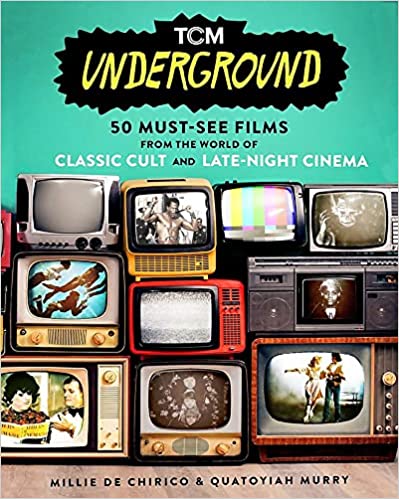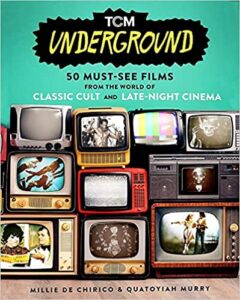
TCM Underground: 50 Must-See Films from the World of Classic Cult and Late-Night Cinema
Any book calling itself TCM Underground: 50 Must-See Films from the World of Classic Cult and Late-Night Cinema is, of course, immediately making itself a hostage to fortune. Why, for instance, these particular 50 films when another 50 might equally be chosen? Nevertheless, this is what it is, and the writing here strikes exactly the right balance between film scholarship and quirky enthusiasm. Based on the Turner Classic Movies series, TCM Underground: 50 Must-See Films from the World of Classic Cult and Late-Night Cinema is the movie-lover’s guide to 50 of the most campy, kitschy, shocking, and weirdly wonderful cult films you need to see. Featuring films primarily from the 1960s, ’70s, and ’80s, the book includes reviews and behind-the-scenes stories, with full-colour and black & white photography throughout. Fans can go along for the ride with new takes on crime films, including The Honeymoon Killers and The Harder They Come; witness one-of-a-kind horror in Bill Gunn’s landmark vampire film Ganja and Hess and Nobuhiko Obayashi’s infamous and indescribable Hausu; and marvel at pure ’80s oddities like Mac and Me and The Garbage Pail Kids.
Published by Running Press
Making Movie Magic by John Richardson
Making Movie Magic: The Photographs by John Richardson
Subtitled ‘A lifetime creating special effects for James Bond, Harry Potter, Superman & More’, Making Movie Magic is a strikingly illustrated history of this country’s premier special effects maestro, John Richardson — the fact that it comes with a foreword by Richard Donner is appropriate (Donner directed the movie that virtually launched the superhero domination of the cinema: Superman: The Movie, in which Richardson and his associates proved that they were up to the challenge of realising the film’s strapline: ‘You’ll believe a man can fly’. But The Man of Steel is only one of the achievements under the talented Richardson’s belt; creating the elaborate special effects required for several 007 movies — not to mention those featuring JK Rowling’s adolescent wizard — called upon all his protean skills, and the secrets of how he did it are contained here. There is, perhaps one caveat about this tempting volume: all the onset photographs are in black and white (although this is compensated for by the generous selection of movie posters of the films discussed in glorious colour). However, there is a companion volume which remedies this: Making Movie Magic: The Photographs.
Published by The History Press
Masters of Make-up Effects by Howard Berger & Marshall Julius
Aficionados of the most creative (and disturbing) make-up effects will be in seventh heaven with the illustrations in this handsome volume which – as the subtitle (A Century of Practical Magic) suggests – is wide in its scope. It’s an oral history, and the behind-the-scenes information imparted here is matched by the visuals that accompany the text. With make-up effects artist Howard Berger and veteran film journalist Marshall Julius in charge, authority is guaranteed.
published by Welbeck
Viva Hollywood: The Legacy of Latin and Hispanic Artists in American Film by Luis Reyes
As someone who has written several books on film, I’m well aware that almost every area for discussion has been pored over, examined and covered — so it is particularly intriguing to see a new area being given the forensic treatment. Viva Hollywood: The Legacy of Latin and Hispanic Artists in American Film by Luis Reyes is particularly useful in giving well-written, sympathetic analyses of the work and lives of actors and actresses within this category, from Anthony Quinn in the golden age of Hollywood up to Antonio Banderas in the present. There are surprises here also for those who have not been paying attention – how many people realise that Raquel Welch is from this particular background? Reyes’ text as perfect justice to his subject. The book is an in-depth look at the community’s often-overlooked achievements in Hollywood from the silent era to the present day. Illustrated with more than 200 full-colour and black-and-white images, Viva Hollywood is both a sweeping history and a celebration of a legacy.
Published by Running Press