

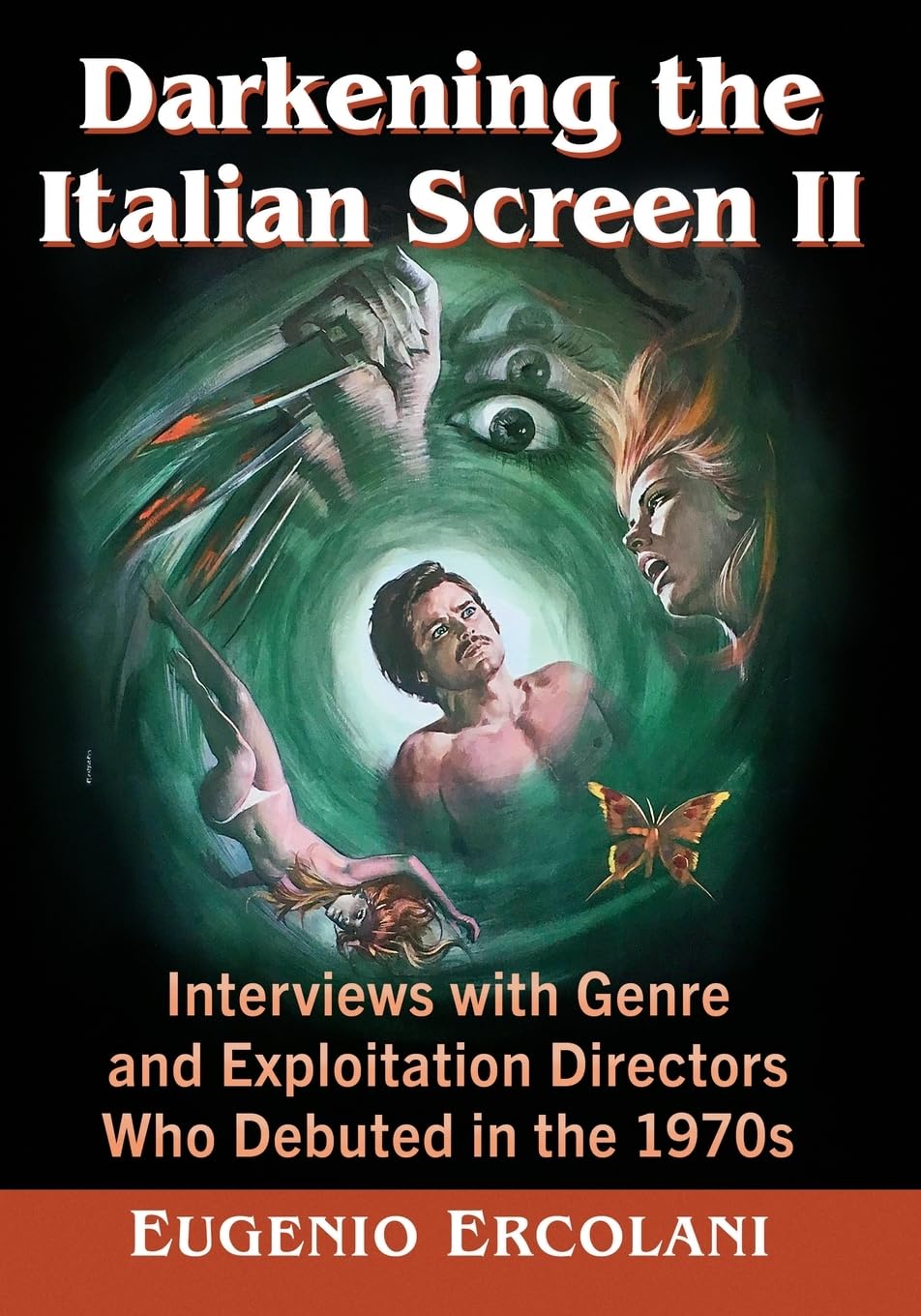
For admirers of Italian genre cinema, this new volume by the industrious and energetic Eugenio Ercolani will be very welcome, offering a snapshot of the work of genre and exploitation directors whose cinema work first appeared in the 1970s. The interviewees include such talents as director Lamberto Bava (son of the great Mario Bava, most iconic of genre filmmakers) and lesser-known names (except to the cognoscenti) such as Aldo Lado. Apart from Ercolani’s forensic attention to detail, he appears to have the skill of bringing out astonishingly unsparing admissions from his interview subjects — there is absolutely nothing anodyne or guarded about any of the interviews here.
Eugenio Ercolani is a film historian and expert on Italian genre cinema, and is the prime mover behind many featurettes and related special content for numerous Blu-ray labels (this writer has had the privilege of working alongside him on several occasions).This new volume is a successor to a similarly named predecessor of which I wrote: ‘Ercolani’s detailed and informative study moves into some very under-recorded areas of Italian cinema, including filmmakers who will be unfamiliar to most (even this writer — and I modestly consider myself something of an authority in the field!). Ercolani has managed to obtain completely frank discussions with the vintage makers of horror, Gialli and poliziotteschi/detective thrillers. Famously, the Italians do not take their own genre contributions as seriously as other countries (Pietro Francisci’s highly influential Hercules movies, for instance, have never appeared on Blu-ray in their country of origin), but Ercolani’s book may go some way to redressing the balance.
But both volumes – I & II — belong on the shelves of Italian genre enthusiasts.
Barry Forshaw
Darkening the Italian Screen II by Eugenio Ercolani is published by McFarland
