Barry Forshaw
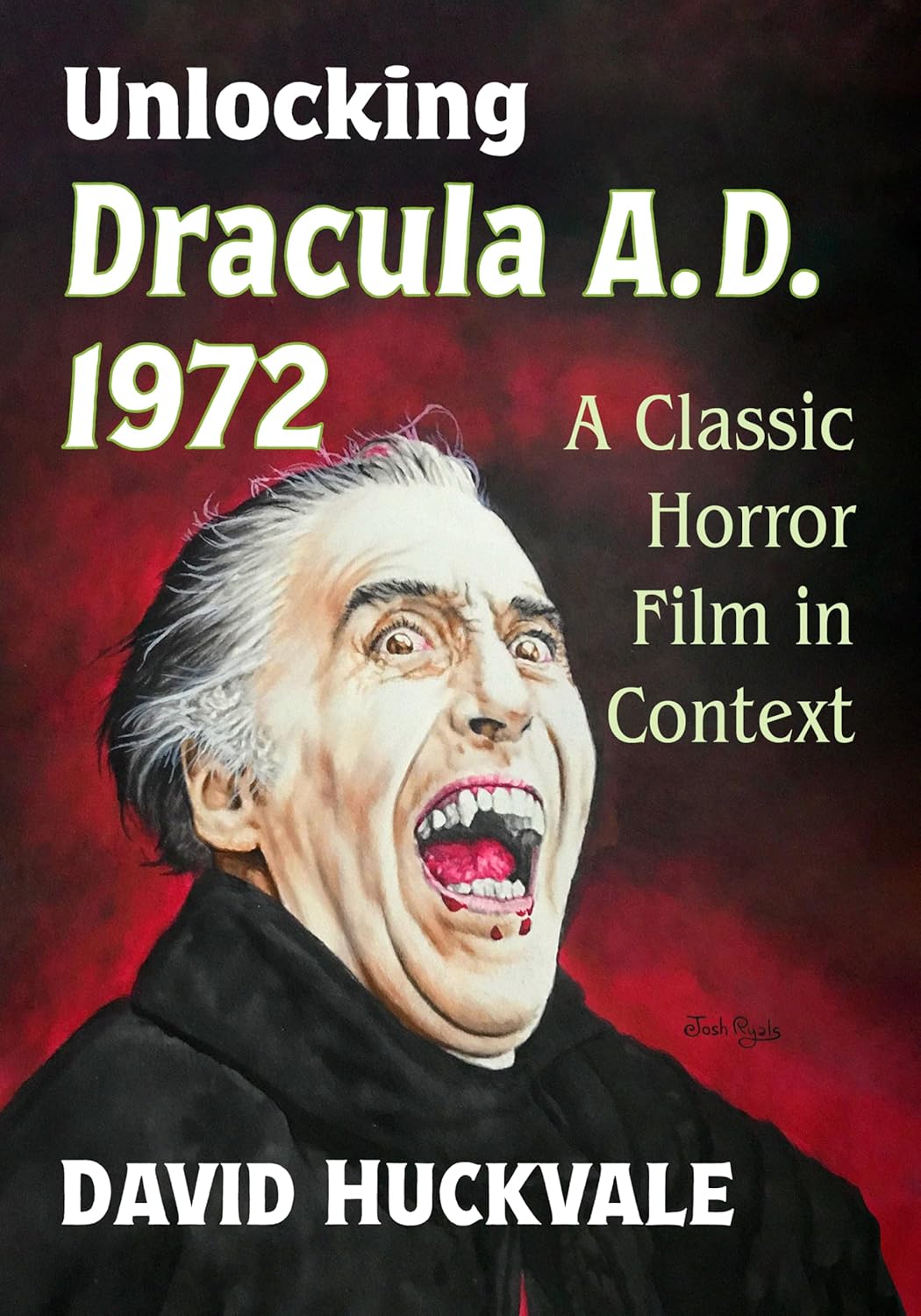 Speaking to the multi-talented David Huckvale recently about what he was working on, I suspected our amiable conversation might be challenged by his answer. ‘I’m writing a book about Dracula A.D. 1972’, David replied. I responded wryly that he would have his work cut out for him, writing about a Hammer film which (along with Scars of Dracula) is hardly on anyone’s favourites list when it comes to Hammer’s outings for the vampire Count. He smiled at my response, obviously convinced that when I’d read his book I’d revise my unenthusiastic opinion regarding the film. David — who has worked as researcher, writer and presenter of BBC radio as well as lecturing at a variety of universities — is also the premier UK expert on film music. He records (as do I) a variety of extras for Blu-rays of celebrated horror films, so who better than him to make the case for a neglected film such as Alan Gibson’s entry in the Hammer Dracula cycle in which the Coubnt does little more than some low-key skulking? Well, in the event (and unsurprisingly) Mr Huckvale is the perfect conduit. He tackles Dracula A.D. 1972 forensically, taking on-board political, social and cinematographic aspects of the film and exploring a variety of themes (including, startlingly, the psychogeography of the Chelsea neighbourhood where the film takes place). even making a case for Mike Vickers’ score which is counterintuitive, given his notable admiration for composer James Bernard when it comes to scoring Christopher Lee’s nocturnal outings. David has produced a truly persuasive piece of work – and while not quite changing my mind, he has sent me back to the film with a new attitude. You can bet that the next time I watch it, I’ll be rereading (as an adjunct) David’s impressive study.
Unlocking Dracula A.D. 1972 by David Huckvale is published by McFarland