

 Barry Forshaw
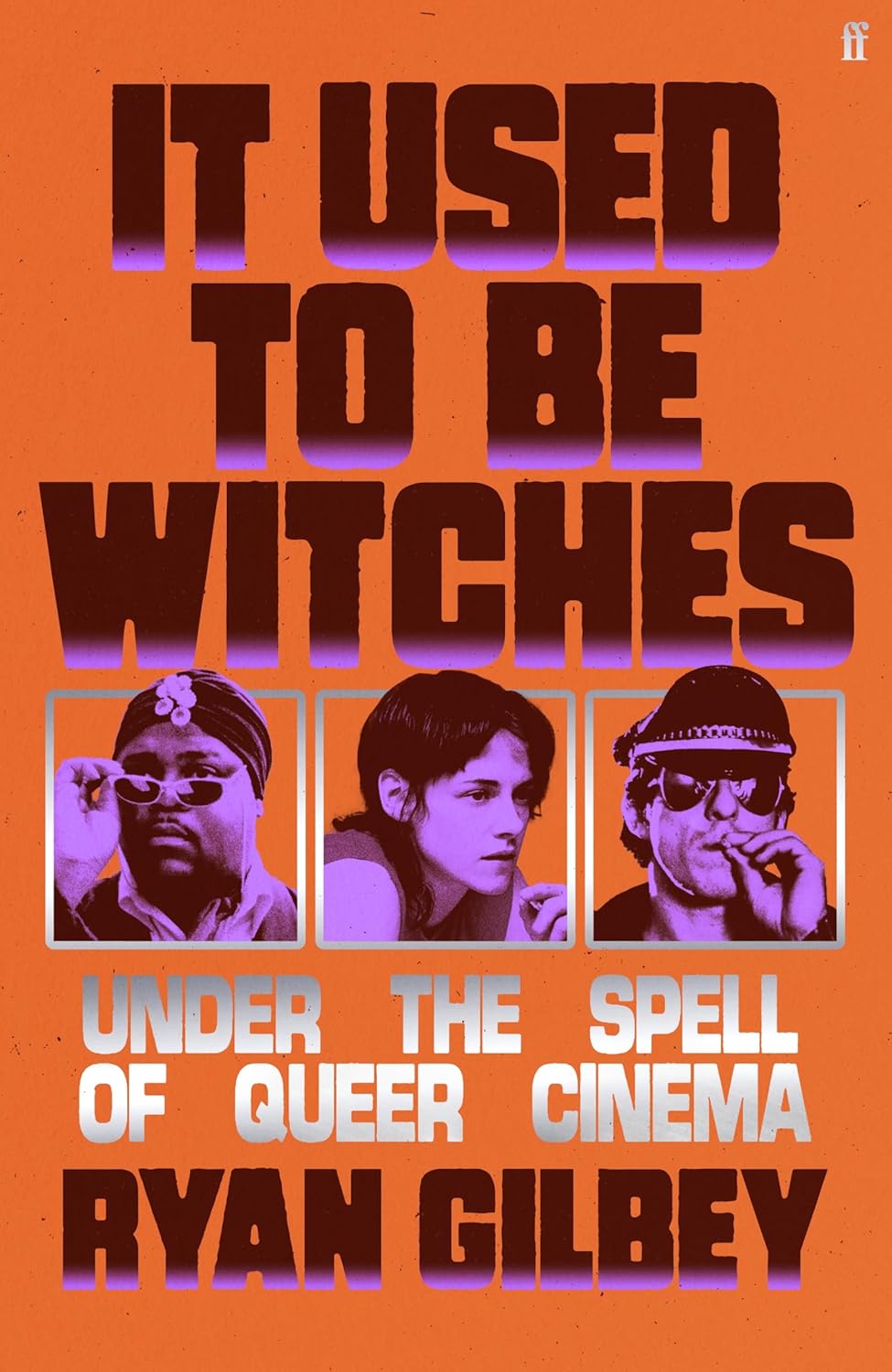
It Used to be Witches by Ryan Gilbey
Despite its playful meta-fictional elements, Ryan Gilbey’s study of films with explicit (or implicit) gay content is an immensely comprehensive study of the field. Subtitled Under the Spell of Queer Cinema, it is written with the author’s customary synthesis of scholarship and accessibility. Gilbey describes himself in the third person on an odyssey through the field on everything from Dirk Bogarde in Victim (1961) to hardcore gay porn, and the level of analysis is rigorous – although the seriousness of approach is set against a sardonic take on much of the material, particularly regarding films from earlier eras in which any commentary on sexuality had to be circumspect. Also included are frank new interviews with filmmakers who have attempted to stretch the boundaries of the treatment of gay themes in cinema. I mentioned Basil Dearden’s film Victim above, and in Sex and Film, I wrote: ‘In Britain, the frank post-coital discussion in Jack Clayton’s film of John Braine’s Room at the Top (1959) and the sympathetic treatment of homosexuality in Basil Dearden’s Victim (1961) were both events that were as significant in the popular consciousness as the radical and ground-breaking literature of the time. A complaint articulated (although not always by gay viewers) about pioneering films that tackled the subject of homosexuality, such as Victim, is that the treatment was never lyrical or life-enhancing; rather, the subject was presented as a societal problem, even though, as in Victim, sympathy is extended to the protagonists.’ However, I have to concede that Ryan Gilbey’s nuanced take on the film is more on the nail than mine — and it’s hard to imagine a more thorough and readable study of queer cinema than Ryan Gilbey’s.
It Used to be Witches by Ryan Gilbey is published by Faber
1971:100 Films in Cinema’s Greatest Year by Robert Sellers
You pays your money and you takes your choice. There is already a book by Stephen Farber and Michael McClellan called Cinema ‘62: The Greatest Year at the Movies. Farber and McClellan make a very persuasive case for their year — not too difficult given that 1962 was the year that produced The Manchurian Candidate, To Kill a Mockingbird, Lawrence of Arabia and Advise and Consent. However, Sellers might also be said to be playing with a stacked deck, given that 1971 was the year of The French Connection, Get Carter and A Clockwork Orange. The difference between the two books is instructive: Cinema ‘62 takes the approach of a forensic analysis of the films discussed, whereas Sellers’ study is more anecdotal, with fascinating information about the films under discussion. Some might say that he undercuts his argument by including such films as Willy Wonka and the Chocolate Factory and the underwhelming Le Mans, but there’s no denying the enthusiasm and sheer readability of his volume. Basically, of course, real aficionados of cinema will need both books on their shelves.
1971:100 Films in Cinema’s Greatest Year by Robert Sellers is published by The History Press
Mitzi Gaynor: Her Life and Career by Peter Shelley
As her biographer Peter Shelley observes, the actress/singer/dancer Mitzi Gaynor is principally remembered for one indelible role: the naïve nurse Nellie Forbush in the film of Rodgers & Hammerstein’s South Pacific, in which Gaynor perfectly encapsulated the vulnerability and energy of the character – and certainly did not need her singing voice dubbed. But while her career is perhaps not quite as stellar as some of her contemporaries, it has frequent high spots, and Shelley conjures these with the skill he applied in previous biographies of such actors as Gene Hackman, Joanne Woodward and Anne Bancroft. Gaynor’s character is not as colourful and conflicted as some other female stars of the period such as Marilyn Monroe (with whom she once co-starred), but there is enough of interest apart from the professional life to make this compact biography worthwhile.
Mitzi Gaynor: Her Life and Career by Peter Shelley is published by McFarland