

Reviewed by 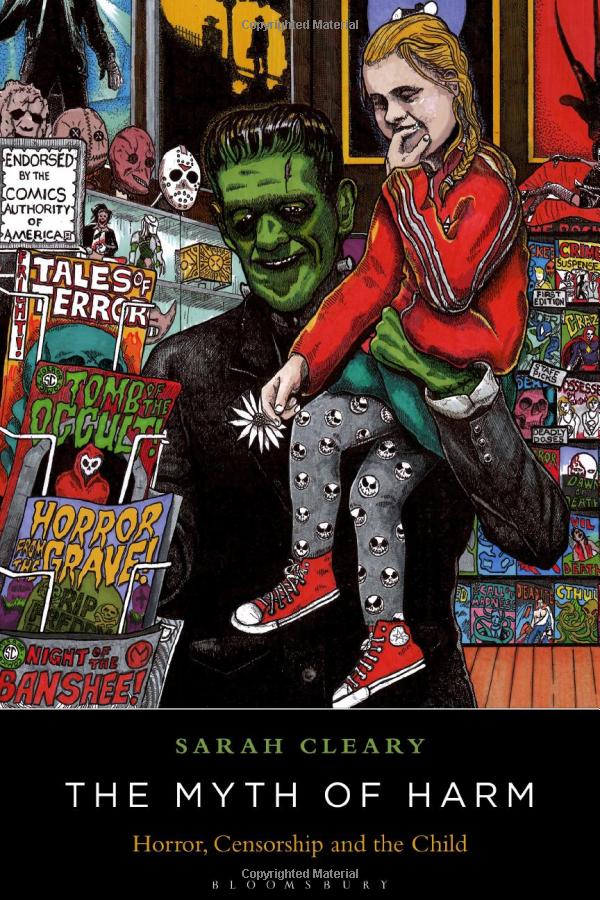 Barry Forshaw
It’s a difficult balancing act, juggling the demands of academic writing and accessibility – but it is most worth pursuing when the subject is popular culture – as comfortably demonstrated with the pricey but invaluable The Myth of Harm by Sarah Cleary, although it should be noted that the Frankenstein monster which adorns the jacket could be said to belong to literary arena as much as the popular (it’s interesting, for instance, that Mary Shelley’s Frankenstein house exhibit in Bath spends much more time on the various film iterations of the Baron and his creation than it does on the youthful author of the original novel and her literary associates). But as a study of the effects of censorship and the supposedly dangerous influence of macabre subjects on the young, Cleary’s analysis is both stimulating and informed – it’s hard to see this topic being treated in a more informed and thorough fashion (and I don’t say that because this writer is namechecked!).
The refulgently-coloured horror and carnality of late 1950s and early 1960s exploitation cinema was to come up against the brick wall of the British censor, who responded to the moral panics of local watch committees by Draconian cutting of this unrespectable genre. Ironically, such Pavlovian responses were not a million miles away from similar vapours inspired by the more discreet bloodletting of Mary Shelley, Bram Stoker and other 18th and 19th century progenitors of the horror genre, but the producers of the Sadean movies of the mid-20th century could not adduce literary respectability, even in the case of direct adaptations, so free were the spins given to the new widescreen versions of Dracula, Frankenstein and co.
Cleary examines these issues – along with treatment of the macabre in a variety of media – with great incisiveness, but avoids tendentiousness. The Myth of Harm is essential reading for those concerned with this still-contentious area.
The Myth of Harm by Sarah Cleary is published by Bloomsbury Academic